Business

Finally: eBRC Made Easy for Indian Freelancers

Content
share on
Contents
Share On

Key takeaways

  • eBRC is a DGFT-verified proof of export earnings, most freelancers only need e-FIRA for taxes and GST.
  • Use eBRC when you claim incentives, participate in tenders, need SOFTEX support, or must evidence export performance.
  • Correct RBI purpose codes, like P0802 for software, are crucial for eBRC eligibility.
  • You need an IEC, an AD Category I bank account, clean invoices, and timely coordination with your bank.
  • Receive payments directly into your bank if you need eBRC, wallet or aggregator routes usually cannot generate it.
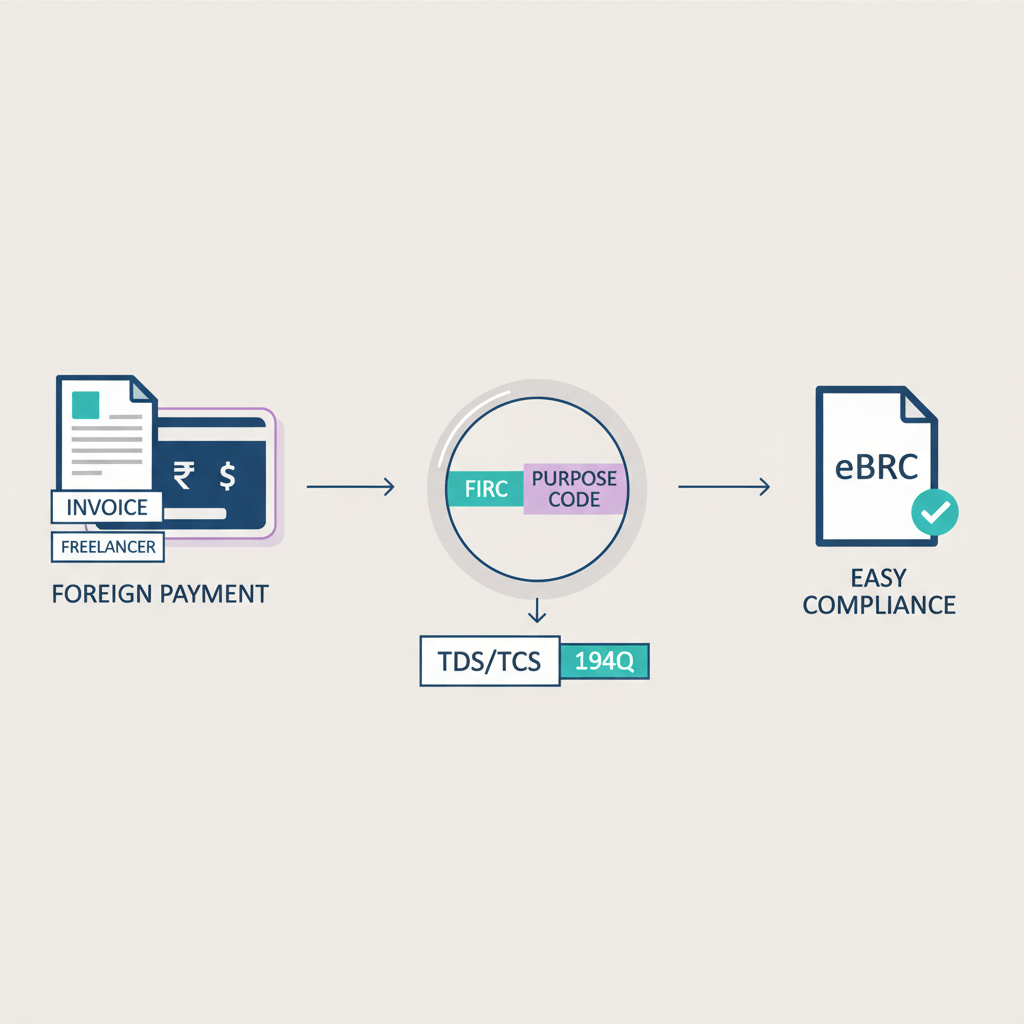
  • Follow a simple flow, invoice, receive payment, ask bank to tag as export, submit docs, wait for DGFT upload, download eBRC.
  • If you do not need DGFT linkage, platforms that auto-generate e-FIRA and settle fast keep life simple.

What is eBRC and why it exists

eBRC, Electronic Bank Realisation Certificate, is the official proof that your foreign earnings were realised in India. Banks upload these records to the DGFT portal, you then retrieve the certificate using your IEC. The system exists to track forex inflows and to enable exporters to claim benefits under government schemes. It is all digital, no stamps, no couriers, just an authenticated PDF you can download whenever you need.

eBRC vs FIRC vs e-FIRA, clearing up the confusion

FIRC or e-FIRA is your payment receipt, it shows who paid you, when, how much, and for what purpose, usually generated automatically by your bank or payment platform. eBRC goes further, it is verified and pushed to DGFT, and it is what schemes and tenders look for when they ask for export performance proof. For a side by side explainer, see eBRC vs FIRC vs e-FIRA. For a quick refresher on when eBRC matters, read what is eBRC.

Shortcut to clarity: think of e-FIRA as your payment receipt, think of eBRC as your government-validated export certificate.

How service exports differ from goods

Services do not have shipping bills, your proof is invoices, proof of delivery, and bank realisation. The banking system relies on RBI purpose codes to identify service exports. For software and IT, the code is often P0802 purpose code, for management consulting it can be P1007. If your bank miscodes the remittance, eBRC will not get generated even if the work is genuine. A detailed primer, again, is here, eBRC vs FIRC vs e-FIRA.

Do you actually need eBRC as a freelancer

Most Indian freelancers do not need eBRC for regular operations. For income tax filing, GST refunds, and standard audits, e-FIRA plus bank statements and invoices are sufficient. When you chase DGFT linked incentives, respond to tenders, apply for certain loans or visas, or need SOFTEX support, that is when eBRC becomes necessary. For a policy level overview, see what is eBRC.

When eBRC becomes necessary

  • DGFT or state incentives: schemes that require verified export performance.
  • Government tenders and large RFPs: they often ask for eBRC as proof.
  • Software services with SOFTEX: eBRC commonly forms part of the trail, see SOFTEX filing.
  • Bank lending and visas: some banks and consulates ask for export proof.
  • Contract requirements: a few enterprise clients demand it.

A simple decision framework

  • Filing ITR or GST refunds: use e-FIRA with invoices and bank statements, no eBRC needed.
  • Claiming incentives or responding to tenders: get IEC and generate eBRC.
  • Software export with SOFTEX: plan for eBRC, link it to your SOFTEX filing.
  • Upwork or Fiverr receipts: e-FIRA and platform reports usually suffice.
  • General audits or bank queries: e-FIRA is typically enough, see what is eBRC for examples.

Prerequisites before you start

Importer Exporter Code, IEC

IEC is your unique DGFT identifier, even service exporters need it. Apply online, the fee is about ₹500. Ensure the legal name on IEC matches your PAN and bank account exactly, name mismatches cause eBRC retrieval failures. For a quick how to, read this IEC application guide.

AD Category I bank account

You must receive the foreign remittance in an AD Category I bank, that is how eBRC gets generated and uploaded to DGFT. Wallets and aggregators are convenient, yet they often cannot produce eBRC because the final credit may show as a domestic transfer. An overview is here, what is eBRC.

Correct RBI purpose code

Purpose codes tell the system this is an export of services. Share the invoice and explicitly request the correct P series code. For software and IT the P0802 purpose code is common. For a deeper dive into miscoding issues, revisit eBRC vs FIRC vs e-FIRA.

Professional invoice

Include invoice number and date, your name and address, IEC and GSTIN, client name and address, scope of work, currency and amount, and payment terms. Keep it simple and precise. Practical tips here, GST compliance for freelancers.

Supporting documentation

Keep your contract or PO, payment confirmations, email threads that show the relationship, and any delivery proof. Banks may not ask for everything, being prepared speeds up approvals.

Step by step, how to get eBRC for export of services

Step 1, issue your invoice

Create and send a clean export invoice before the payment arrives. Save a PDF, you will share it with your bank.

Step 2, receive payment through banking channels

Ask clients to pay via SWIFT, ACH, or SEPA to your AD Category I bank account. Crypto, cash, or informal routes will not work for eBRC.

Step 3, request export service tagging

Notify the bank’s trade or forex team as soon as you receive the credit, ask them to tag the remittance as export of services and generate eBRC, share your invoice and IEC. Many banks have simple forms, others accept a signed email. A concise overview is here, what is eBRC, export.

Step 4, submit documents

Provide invoice, IEC, client details, and payment proof if requested. The bank validates and then uploads to DGFT. Background on timelines here, what is eBRC.

Step 5, wait for processing

DGFT typically reflects records in three to ten working days from realisation. Complex cases may take longer, follow up politely if it crosses two weeks.

Step 6, retrieve from DGFT

Log in with your IEC on the DGFT portal, search by date range or invoice details, verify the record, then download the PDF eBRC. A quick refresher, what is eBRC, export.

Step 7, fix mismatches

If you spot wrong purpose codes, name mismatches, or amount issues, escalate to your bank’s trade team and request a correction and re upload. DGFT updates typically appear within a few days of the corrected submission. Reference notes and help, what is eBRC.

How to download and view eBRC online

Accessing DGFT

Register or log in with IEC, PAN, and mobile on the DGFT portal. Navigate to the eBRC module to search for your realisations.

Searching effectively

  • Use a tight date range around the realisation date.
  • Filter by invoice number if you have multiple clients.
  • Check bank name when you work with more than one bank.

Verification checklist

  • Realised value matches the INR credit after conversion.
  • Currency, bank, and purpose code look correct.
  • Your legal name and IEC align with your bank records.

Download the PDF and store it safely. Keep a simple folder structure, year, quarter, client, eBRC.

Common problems and how to fix them

Bank used a non export purpose code

Ask the bank to re tag with the correct P series code and re upload. If someone refuses, escalate to branch leadership with your original email trail. For context on miscoding, see eBRC vs FIRC vs e-FIRA.

Payment came via wallet or aggregator

When PayPal or similar credits your account domestically, banks cannot tag it as foreign export realisation. Use platforms for convenience when eBRC is not needed, switch to direct bank wires when you do need eBRC. Background here, eBRC vs FIRC vs e-FIRA.

Name mismatch between bank and IEC

Update your bank account to the exact legal name on IEC, or modify IEC to match the bank, matching the bank is usually faster. Process guidance, IEC application guide.

Partial or split payments

Share both payment advices and request either separate eBRCs per realisation or a consolidated one once all parts arrive. Banks support both paths, coordinate with trade operations. More examples, what is eBRC.

Currency or amount discrepancies

Minor differences arise due to forex rates at the moment of realisation, big gaps warrant a check with your bank’s forex team. A quick explainer, what is eBRC, export.

Long delays

If it is beyond three weeks, request the DGFT upload reference from your bank and ask them to validate the status. If the bank confirms upload, wait a bit more or raise a DGFT helpdesk ticket with your IEC and transaction details. Context, what is eBRC.

Real world examples

Software developer in Pune

A developer invoices a US client, informs his bank to tag the incoming ACH as export of software services with P0802, and shares IEC. Ten days after realisation, he downloads eBRC from DGFT and uses it to apply for a state benefit. For background, see what is eBRC.

Graphic designer using PayPal

A designer learns that wallet routed credits appear as domestic transfers, so no eBRC. For a UK project she switches to SWIFT directly to her bank, requests export tagging, and retrieves eBRC within a week. Why wallets differ is covered in eBRC vs FIRC vs e-FIRA.

Content writer on marketplaces

A writer working via Upwork relies on platform reports and e-FIRA for taxes and GST, since aggregated payouts rarely produce eBRC. This is fine when incentives are not in play. Reference, eBRC vs FIRC vs e-FIRA.

Consultant with enterprise clients

A consultant on monthly retainers sends a monthly note to the bank’s trade desk with invoice numbers and IEC, the bank tags all remittances as exports, and quarterly eBRC downloads are kept for tenders.

Compliance and record keeping best practices

Create a document system

Maintain for each transaction, invoice, contract or SOW, email confirmation, payment proof, e-FIRA, and eBRC. Practical GST record tips here, GST compliance for freelancers.

Reconcile regularly

Every quarter reconcile invoices to payments, payments to e-FIRAs, and, if applicable, e-FIRAs to eBRCs. This helps you fix tagging gaps early. For common pitfalls, see eBRC vs FIRC vs e-FIRA.

Track dates and SLAs

Maintain a sheet with invoice date, payment date, bank notified date, expected eBRC date, and actual retrieval date. You will spot slow banks quickly. For general context, read what is eBRC.

Keep backups

Store documents in at least two places, local and cloud. For large value projects, keep a printed set as well.

Also remember to log into DGFT annually to confirm IEC status, if you change banks or business structure, update DGFT and inform your bank promptly. For IEC housekeeping, see IEC application guide.

Understanding where payment platforms fit

When platforms work perfectly

If you do not need DGFT linkage, modern cross border platforms simplify everything, you get multi currency collection accounts, fast INR settlement, and automatic e-FIRA for tax compliance. For example, Karbon Business offers virtual USD, EUR, GBP, and CAD accounts, auto generates e-FIRA within about a day, and settles INR quickly, which is ideal when eBRC is not required. For a primer on when to choose bank wires instead, revisit eBRC vs FIRC vs e-FIRA.

When you need traditional banking

For incentives, tenders, or SOFTEX, insist on direct receipt in your AD Category I bank, platforms cannot upload to DGFT on your behalf.

Hybrid approach

Use platforms for routine gigs where eBRC is unnecessary, use direct bank wires for projects that demand DGFT proof. This balance maximises convenience and preserves documentation capability.

Your next steps

If you do not need eBRC

Optimise for speed and clarity, ensure every foreign payment has an e-FIRA, keep invoices neat, reconcile quarterly, and focus on work that pays.

If you do need eBRC

  • Apply for IEC, ensure your bank and IEC names match precisely.
  • Prepare robust invoice templates and a document system.
  • Build a relationship with your bank’s trade desk, proactive communication wins.
  • For every incoming payment, notify the bank, confirm export tagging, follow up, then retrieve from DGFT.

If you are unsure

Audit last year’s payments, list what documents you already get, decide if incentives or tenders are on your horizon, and do a test run with a small payment. You will master the process without risking a big opportunity. For a simple refresher, revisit what is eBRC.

Bottom line: choose documentation based on your goals, if you need government verified proof, go the eBRC route, if you only need tax compliance, e-FIRA and clean records are enough.

FAQ

As a freelancer, do I really need an IEC to get eBRC?

Yes, IEC is how DGFT identifies you, without IEC you cannot retrieve eBRC from the portal even if your bank has tagged the payment as export, apply online and ensure the name matches your PAN and bank records.

Upwork payout se eBRC milta hai kya?

Usually no, marketplace payouts are aggregated and often appear as domestic credits via their Indian partners, banks cannot tag these as foreign export realisations, for eBRC you need direct SWIFT or ACH into your AD Category I bank account, otherwise rely on platform reports and e-FIRA for taxes.

PayPal ya similar wallet se aaye payment par eBRC banega?

Mostly not, wallets typically settle domestically after conversion, which breaks the DGFT trail, use direct bank wires when you need eBRC, for regular compliance a wallet’s e-FIRA plus bank statements is usually fine.

Karbon Business use karu to eBRC milega ya sirf e-FIRA?

Karbon Business is great when you do not need DGFT linkage, it provides virtual foreign currency accounts and auto generates e-FIRA for tax compliance, if you specifically need eBRC for incentives or tenders, receive that project’s payment directly in your AD Category I bank via SWIFT and coordinate tagging with the bank.

P0802 purpose code kya hota hai, aur bank ko kaise ensure karu ki sahi code lage?

P0802 is the RBI purpose code commonly used for software and IT services, share your invoice, call or email the bank’s trade desk, and clearly request export of services tagging with the right P series code before or immediately after the credit hits.

FIRC aur eBRC me simple difference kya hai?

FIRC or e-FIRA is a bank or platform issued payment receipt for foreign inward remittances, it works for tax and GST, eBRC is bank verified and uploaded to DGFT, it is required for schemes, tenders, or SOFTEX, most freelancers only need e-FIRA unless they chase incentives.

eBRC aane me kitna time lagta hai, follow up kaise karu?

Three to ten working days after realisation is typical, if it crosses two weeks, ask your bank’s trade team for the DGFT upload reference, if they confirm upload, wait a bit or raise a DGFT helpdesk ticket with your IEC and transaction details.

Purane payments ke liye eBRC nikal sakta hoon kya?

Sometimes yes within the same financial year, your bank must agree to retrospectively tag and upload, the older the transaction, the tougher it becomes, act early and keep invoices and proofs handy.

Bank account name aur IEC name mismatch ho gaya to kya karu?

Fix the mismatch immediately, update the bank account name to your full legal name as on PAN or modify IEC, matching the bank is usually faster, without a match DGFT retrieval can fail.

Client ne split payments kiye, eBRC kaise banega?

Provide both payment advices and the invoice reference to the bank, they can issue separate eBRCs per realisation or one consolidated certificate after the final receipt, confirm your preference in writing.

SOFTEX ke liye eBRC mandatory hota hai kya?

Often yes, especially when you claim benefits or need a complete compliance trail, coordinate with your bank to ensure the software export remittance is tagged correctly and that eBRC is available to link with your SOFTEX filing.

International payments receive karne ke liye konsa method best hai, platform ya direct bank?

If you do not need DGFT proof, platforms like Karbon Business are efficient, fast settlement and automatic e-FIRA, if you need incentives, tenders, or SOFTEX, ask the client to pay directly to your AD Category I bank and get eBRC generated.

Key takeaways

  • eBRC is a DGFT-verified proof of export earnings, most freelancers only need e-FIRA for taxes and GST.
  • Use eBRC when you claim incentives, participate in tenders, need SOFTEX support, or must evidence export performance.
  • Correct RBI purpose codes, like P0802 for software, are crucial for eBRC eligibility.
  • You need an IEC, an AD Category I bank account, clean invoices, and timely coordination with your bank.
  • Receive payments directly into your bank if you need eBRC, wallet or aggregator routes usually cannot generate it.
  • Follow a simple flow, invoice, receive payment, ask bank to tag as export, submit docs, wait for DGFT upload, download eBRC.
  • If you do not need DGFT linkage, platforms that auto-generate e-FIRA and settle fast keep life simple.

What is eBRC and why it exists

eBRC, Electronic Bank Realisation Certificate, is the official proof that your foreign earnings were realised in India. Banks upload these records to the DGFT portal, you then retrieve the certificate using your IEC. The system exists to track forex inflows and to enable exporters to claim benefits under government schemes. It is all digital, no stamps, no couriers, just an authenticated PDF you can download whenever you need.

eBRC vs FIRC vs e-FIRA, clearing up the confusion

FIRC or e-FIRA is your payment receipt, it shows who paid you, when, how much, and for what purpose, usually generated automatically by your bank or payment platform. eBRC goes further, it is verified and pushed to DGFT, and it is what schemes and tenders look for when they ask for export performance proof. For a side by side explainer, see eBRC vs FIRC vs e-FIRA. For a quick refresher on when eBRC matters, read what is eBRC.

Shortcut to clarity: think of e-FIRA as your payment receipt, think of eBRC as your government-validated export certificate.

How service exports differ from goods

Services do not have shipping bills, your proof is invoices, proof of delivery, and bank realisation. The banking system relies on RBI purpose codes to identify service exports. For software and IT, the code is often P0802 purpose code, for management consulting it can be P1007. If your bank miscodes the remittance, eBRC will not get generated even if the work is genuine. A detailed primer, again, is here, eBRC vs FIRC vs e-FIRA.

Do you actually need eBRC as a freelancer

Most Indian freelancers do not need eBRC for regular operations. For income tax filing, GST refunds, and standard audits, e-FIRA plus bank statements and invoices are sufficient. When you chase DGFT linked incentives, respond to tenders, apply for certain loans or visas, or need SOFTEX support, that is when eBRC becomes necessary. For a policy level overview, see what is eBRC.

When eBRC becomes necessary

  • DGFT or state incentives: schemes that require verified export performance.
  • Government tenders and large RFPs: they often ask for eBRC as proof.
  • Software services with SOFTEX: eBRC commonly forms part of the trail, see SOFTEX filing.
  • Bank lending and visas: some banks and consulates ask for export proof.
  • Contract requirements: a few enterprise clients demand it.

A simple decision framework

  • Filing ITR or GST refunds: use e-FIRA with invoices and bank statements, no eBRC needed.
  • Claiming incentives or responding to tenders: get IEC and generate eBRC.
  • Software export with SOFTEX: plan for eBRC, link it to your SOFTEX filing.
  • Upwork or Fiverr receipts: e-FIRA and platform reports usually suffice.
  • General audits or bank queries: e-FIRA is typically enough, see what is eBRC for examples.

Prerequisites before you start

Importer Exporter Code, IEC

IEC is your unique DGFT identifier, even service exporters need it. Apply online, the fee is about ₹500. Ensure the legal name on IEC matches your PAN and bank account exactly, name mismatches cause eBRC retrieval failures. For a quick how to, read this IEC application guide.

AD Category I bank account

You must receive the foreign remittance in an AD Category I bank, that is how eBRC gets generated and uploaded to DGFT. Wallets and aggregators are convenient, yet they often cannot produce eBRC because the final credit may show as a domestic transfer. An overview is here, what is eBRC.

Correct RBI purpose code

Purpose codes tell the system this is an export of services. Share the invoice and explicitly request the correct P series code. For software and IT the P0802 purpose code is common. For a deeper dive into miscoding issues, revisit eBRC vs FIRC vs e-FIRA.

Professional invoice

Include invoice number and date, your name and address, IEC and GSTIN, client name and address, scope of work, currency and amount, and payment terms. Keep it simple and precise. Practical tips here, GST compliance for freelancers.

Supporting documentation

Keep your contract or PO, payment confirmations, email threads that show the relationship, and any delivery proof. Banks may not ask for everything, being prepared speeds up approvals.

Step by step, how to get eBRC for export of services

Step 1, issue your invoice

Create and send a clean export invoice before the payment arrives. Save a PDF, you will share it with your bank.

Step 2, receive payment through banking channels

Ask clients to pay via SWIFT, ACH, or SEPA to your AD Category I bank account. Crypto, cash, or informal routes will not work for eBRC.

Step 3, request export service tagging

Notify the bank’s trade or forex team as soon as you receive the credit, ask them to tag the remittance as export of services and generate eBRC, share your invoice and IEC. Many banks have simple forms, others accept a signed email. A concise overview is here, what is eBRC, export.

Step 4, submit documents

Provide invoice, IEC, client details, and payment proof if requested. The bank validates and then uploads to DGFT. Background on timelines here, what is eBRC.

Step 5, wait for processing

DGFT typically reflects records in three to ten working days from realisation. Complex cases may take longer, follow up politely if it crosses two weeks.

Step 6, retrieve from DGFT

Log in with your IEC on the DGFT portal, search by date range or invoice details, verify the record, then download the PDF eBRC. A quick refresher, what is eBRC, export.

Step 7, fix mismatches

If you spot wrong purpose codes, name mismatches, or amount issues, escalate to your bank’s trade team and request a correction and re upload. DGFT updates typically appear within a few days of the corrected submission. Reference notes and help, what is eBRC.

How to download and view eBRC online

Accessing DGFT

Register or log in with IEC, PAN, and mobile on the DGFT portal. Navigate to the eBRC module to search for your realisations.

Searching effectively

  • Use a tight date range around the realisation date.
  • Filter by invoice number if you have multiple clients.
  • Check bank name when you work with more than one bank.

Verification checklist

  • Realised value matches the INR credit after conversion.
  • Currency, bank, and purpose code look correct.
  • Your legal name and IEC align with your bank records.

Download the PDF and store it safely. Keep a simple folder structure, year, quarter, client, eBRC.

Common problems and how to fix them

Bank used a non export purpose code

Ask the bank to re tag with the correct P series code and re upload. If someone refuses, escalate to branch leadership with your original email trail. For context on miscoding, see eBRC vs FIRC vs e-FIRA.

Payment came via wallet or aggregator

When PayPal or similar credits your account domestically, banks cannot tag it as foreign export realisation. Use platforms for convenience when eBRC is not needed, switch to direct bank wires when you do need eBRC. Background here, eBRC vs FIRC vs e-FIRA.

Name mismatch between bank and IEC

Update your bank account to the exact legal name on IEC, or modify IEC to match the bank, matching the bank is usually faster. Process guidance, IEC application guide.

Partial or split payments

Share both payment advices and request either separate eBRCs per realisation or a consolidated one once all parts arrive. Banks support both paths, coordinate with trade operations. More examples, what is eBRC.

Currency or amount discrepancies

Minor differences arise due to forex rates at the moment of realisation, big gaps warrant a check with your bank’s forex team. A quick explainer, what is eBRC, export.

Long delays

If it is beyond three weeks, request the DGFT upload reference from your bank and ask them to validate the status. If the bank confirms upload, wait a bit more or raise a DGFT helpdesk ticket with your IEC and transaction details. Context, what is eBRC.

Real world examples

Software developer in Pune

A developer invoices a US client, informs his bank to tag the incoming ACH as export of software services with P0802, and shares IEC. Ten days after realisation, he downloads eBRC from DGFT and uses it to apply for a state benefit. For background, see what is eBRC.

Graphic designer using PayPal

A designer learns that wallet routed credits appear as domestic transfers, so no eBRC. For a UK project she switches to SWIFT directly to her bank, requests export tagging, and retrieves eBRC within a week. Why wallets differ is covered in eBRC vs FIRC vs e-FIRA.

Content writer on marketplaces

A writer working via Upwork relies on platform reports and e-FIRA for taxes and GST, since aggregated payouts rarely produce eBRC. This is fine when incentives are not in play. Reference, eBRC vs FIRC vs e-FIRA.

Consultant with enterprise clients

A consultant on monthly retainers sends a monthly note to the bank’s trade desk with invoice numbers and IEC, the bank tags all remittances as exports, and quarterly eBRC downloads are kept for tenders.

Compliance and record keeping best practices

Create a document system

Maintain for each transaction, invoice, contract or SOW, email confirmation, payment proof, e-FIRA, and eBRC. Practical GST record tips here, GST compliance for freelancers.

Reconcile regularly

Every quarter reconcile invoices to payments, payments to e-FIRAs, and, if applicable, e-FIRAs to eBRCs. This helps you fix tagging gaps early. For common pitfalls, see eBRC vs FIRC vs e-FIRA.

Track dates and SLAs

Maintain a sheet with invoice date, payment date, bank notified date, expected eBRC date, and actual retrieval date. You will spot slow banks quickly. For general context, read what is eBRC.

Keep backups

Store documents in at least two places, local and cloud. For large value projects, keep a printed set as well.

Also remember to log into DGFT annually to confirm IEC status, if you change banks or business structure, update DGFT and inform your bank promptly. For IEC housekeeping, see IEC application guide.

Understanding where payment platforms fit

When platforms work perfectly

If you do not need DGFT linkage, modern cross border platforms simplify everything, you get multi currency collection accounts, fast INR settlement, and automatic e-FIRA for tax compliance. For example, Karbon Business offers virtual USD, EUR, GBP, and CAD accounts, auto generates e-FIRA within about a day, and settles INR quickly, which is ideal when eBRC is not required. For a primer on when to choose bank wires instead, revisit eBRC vs FIRC vs e-FIRA.

When you need traditional banking

For incentives, tenders, or SOFTEX, insist on direct receipt in your AD Category I bank, platforms cannot upload to DGFT on your behalf.

Hybrid approach

Use platforms for routine gigs where eBRC is unnecessary, use direct bank wires for projects that demand DGFT proof. This balance maximises convenience and preserves documentation capability.

Your next steps

If you do not need eBRC

Optimise for speed and clarity, ensure every foreign payment has an e-FIRA, keep invoices neat, reconcile quarterly, and focus on work that pays.

If you do need eBRC

  • Apply for IEC, ensure your bank and IEC names match precisely.
  • Prepare robust invoice templates and a document system.
  • Build a relationship with your bank’s trade desk, proactive communication wins.
  • For every incoming payment, notify the bank, confirm export tagging, follow up, then retrieve from DGFT.

If you are unsure

Audit last year’s payments, list what documents you already get, decide if incentives or tenders are on your horizon, and do a test run with a small payment. You will master the process without risking a big opportunity. For a simple refresher, revisit what is eBRC.

Bottom line: choose documentation based on your goals, if you need government verified proof, go the eBRC route, if you only need tax compliance, e-FIRA and clean records are enough.

FAQ

As a freelancer, do I really need an IEC to get eBRC?

Yes, IEC is how DGFT identifies you, without IEC you cannot retrieve eBRC from the portal even if your bank has tagged the payment as export, apply online and ensure the name matches your PAN and bank records.

Upwork payout se eBRC milta hai kya?

Usually no, marketplace payouts are aggregated and often appear as domestic credits via their Indian partners, banks cannot tag these as foreign export realisations, for eBRC you need direct SWIFT or ACH into your AD Category I bank account, otherwise rely on platform reports and e-FIRA for taxes.

PayPal ya similar wallet se aaye payment par eBRC banega?

Mostly not, wallets typically settle domestically after conversion, which breaks the DGFT trail, use direct bank wires when you need eBRC, for regular compliance a wallet’s e-FIRA plus bank statements is usually fine.

Karbon Business use karu to eBRC milega ya sirf e-FIRA?

Karbon Business is great when you do not need DGFT linkage, it provides virtual foreign currency accounts and auto generates e-FIRA for tax compliance, if you specifically need eBRC for incentives or tenders, receive that project’s payment directly in your AD Category I bank via SWIFT and coordinate tagging with the bank.

P0802 purpose code kya hota hai, aur bank ko kaise ensure karu ki sahi code lage?

P0802 is the RBI purpose code commonly used for software and IT services, share your invoice, call or email the bank’s trade desk, and clearly request export of services tagging with the right P series code before or immediately after the credit hits.

FIRC aur eBRC me simple difference kya hai?

FIRC or e-FIRA is a bank or platform issued payment receipt for foreign inward remittances, it works for tax and GST, eBRC is bank verified and uploaded to DGFT, it is required for schemes, tenders, or SOFTEX, most freelancers only need e-FIRA unless they chase incentives.

eBRC aane me kitna time lagta hai, follow up kaise karu?

Three to ten working days after realisation is typical, if it crosses two weeks, ask your bank’s trade team for the DGFT upload reference, if they confirm upload, wait a bit or raise a DGFT helpdesk ticket with your IEC and transaction details.

Purane payments ke liye eBRC nikal sakta hoon kya?

Sometimes yes within the same financial year, your bank must agree to retrospectively tag and upload, the older the transaction, the tougher it becomes, act early and keep invoices and proofs handy.

Bank account name aur IEC name mismatch ho gaya to kya karu?

Fix the mismatch immediately, update the bank account name to your full legal name as on PAN or modify IEC, matching the bank is usually faster, without a match DGFT retrieval can fail.

Client ne split payments kiye, eBRC kaise banega?

Provide both payment advices and the invoice reference to the bank, they can issue separate eBRCs per realisation or one consolidated certificate after the final receipt, confirm your preference in writing.

SOFTEX ke liye eBRC mandatory hota hai kya?

Often yes, especially when you claim benefits or need a complete compliance trail, coordinate with your bank to ensure the software export remittance is tagged correctly and that eBRC is available to link with your SOFTEX filing.

International payments receive karne ke liye konsa method best hai, platform ya direct bank?

If you do not need DGFT proof, platforms like Karbon Business are efficient, fast settlement and automatic e-FIRA, if you need incentives, tenders, or SOFTEX, ask the client to pay directly to your AD Category I bank and get eBRC generated.

The views expressed in the blogs on this page are solely the opinions of the authors and do not constitute expert advice. While we strive to provide accurate and up-to-date information, we make no representations or warranties of any kind, express or implied, about the completeness, accuracy, reliability, suitability or availability with respect to the website or the information, products, services, or related graphics contained on the website for any purpose. Any reliance you place on such information is therefore strictly at your own risk. We disclaim any liability for any loss or damage including without limitation, indirect or consequential loss or damage, or any loss or damage whatsoever arising from loss of data or profits arising out of, or in connection with, the use of this website.

Find out how we can help you today!

Speak to our foreign payment specialist
Whatsapp-color Created with Sketch.
Whatsapp:
+91 74117 02726
Email:
sales@karboncard.com
Address:
Ground Floor, Karbon Business, 1st Stage Rd, Binnamangala, Hoysala Nagar, Indiranagar, Bengaluru, Karnataka 560038

Find out how we can help you today!

Speak to our foreign payment specialist
Whatsapp-color Created with Sketch.
Whatsapp:
+91 74117 02726
Email:
sales@karboncard.com
Address:
Ground Floor, Karbon Business, 1st Stage Rd, Binnamangala, Hoysala Nagar, Indiranagar, Bengaluru, Karnataka 560038

Latest from our blogs

Latest from our blogs

View All
× Save 50% - Start Now