

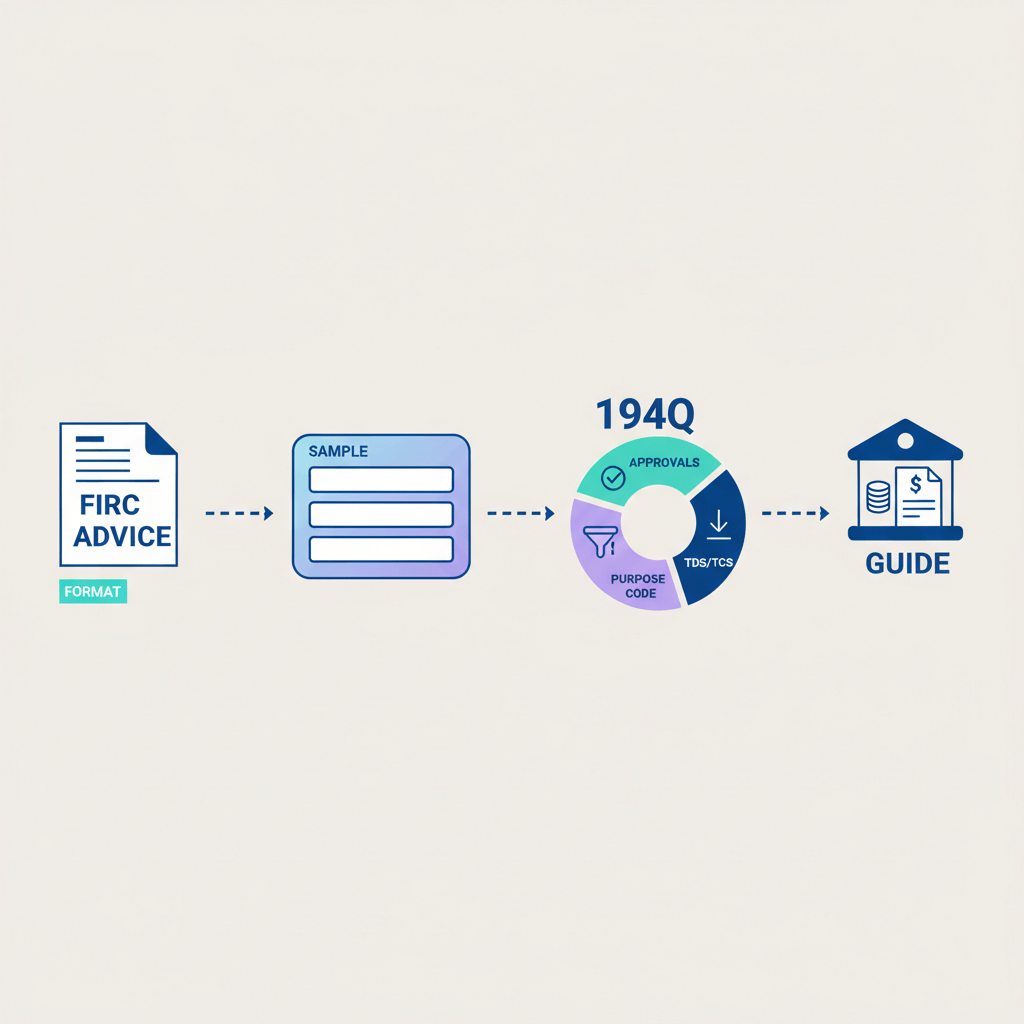


Key takeaways
- Foreign Inward Remittance Advice, FIRA, is the RBI accepted proof of foreign income for Indian freelancers, without it, audits, ITR, and loan applications get complicated.
- Remittance advice says payment sent, bank credit advice says payment received, FIRA confirms the money is legally received and reported to RBI, it carries compliance weight.
- A proper FIRA includes beneficiary, remitter, transaction details, exchange rate, INR credited, purpose code, UTR or SWIFT references, and AD bank information.
- Verify your FIRA for accurate purpose code, remitter details, INR net of charges, correct dates, and valid UTR or MT103 references, fix mismatches immediately.
- Banks usually issue e-FIRA within 24 to 48 hours of RBI reporting, if delayed, follow up with your branch, escalate through grievance channels when needed.
- Keep a clean trail, Invoice, Remittance Advice, Bank Credit Advice, and e-FIRA, organized folders and a simple tracker save time during tax season.
- If bank runaround is slowing you down, platforms like Karbon Business automate e-FIRA, assign correct purpose codes, and settle INR quickly.
What does FIRA mean for Indian freelancers?
FIRA stands for Foreign Inward Remittance Advice, it is issued by your Authorised Dealer bank as the official confirmation that foreign currency was received, converted, and credited to your Indian account. The document lists the foreign amount, the exchange rate, the INR credited, the sender details, and the purpose code, making it your strongest proof of foreign income under FEMA and RBI rules. For freelancers, FIRA is your accepted evidence during ITR filing, GST audits, SOFTEX compliance, IEC linked exports, loan applications, and even visa checks. Unlike screenshots or emails, FIRA is the regulator recognized document for export proceeds. Today, banks issue digital e-FIRA PDFs that replaced older paper FIRCs for export services. For a practical overview, see what is FIRA and its importance for freelancers in India.
Remittance advice vs bank credit advice, what is the difference?
Remittance advice from your client or platform confirms they sent money, helpful for invoice matching, not a compliance document. Bank credit advice shows funds credited with a UTR, useful for reconciliation, still not sufficient for export compliance. FIRA is the official AD bank certificate with purpose code and regulatory reporting, it proves the export proceeds were legally received and reported. As a simple heuristic, remittance advice says payment sent, bank credit advice says payment received, FIRA says payment received legally and reported to RBI. For more context, read the importance of FIRA for freelancers.
“When auditors ask for proof, they want FIRA, not emails or statements.”
Understanding the Foreign Inward Remittance Advice format
While templates vary across banks, every legitimate e-FIRA contains these core sections:
- Beneficiary details: Your name or proprietorship, account number, IFSC, sometimes address, ensure name matches the PAN exactly.
- Remitter details: Client name, full address, country, and their bank, accurate source data matters for compliance.
- Transaction details: Foreign currency and amount, exchange rate applied, net INR credited after bank charges, received and credited dates.
- Purpose code: RBI categorization of your service, for software services or consultancy, you will typically see 1052 or 1051, review the RBI purpose codes for freelancers in India to pick the right one.
- Reference numbers: SWIFT MT103 reference for wire transfers, UTR number for reconciliation, and other channel identifiers.
- AD bank information: Bank AD code, branch, contact details, and an authorized signatory statement or digital signature.
Most banks auto generate e-FIRA within 24 to 48 hours post RBI reporting, accessible on net banking or via email. If any core field is missing, you may be looking at a transaction slip, not a proper FIRA. For a quick primer on the digital certificate, see e-FIRA.
Sample FIRA, what your document should look like
Text representation, your bank will provide a formatted PDF.
FOREIGN INWARD REMITTANCE ADVICE, e-FIRA
AD Bank, HDFC Bank Ltd, Branch, Connaught Place New Delhi, AD Code, AD1234567
Date of Issue, 15/01/2025
Beneficiary, Name, Rajesh Kumar, Freelance Designer, Account Number, 50100123456789, IFSC, HDFC0001234, Address, Mumbai Maharashtra
Remitter, Name, DesignHub Inc, Address, 456 Market Street San Francisco CA 94103 USA, Bank, Wells Fargo Bank
Transaction Details, Foreign Currency Amount, USD 1,000.00, Exchange Rate Applied, INR 83.50 per USD, INR Amount Credited, INR 83,200.00, Net after bank charges of INR 300, Date Payment Received, 10/01/2025, Date Credited to Account, 12/01/2025, Purpose Code, 1051, Professional Technical Consultancy Services, Payment Reference, SWIFT MT103 Reference WF20250110ABC123, UTR Number, HDFCINBB202501129876543210, Payment Channel, ACH Transfer
Remarks, This certifies receipt of foreign inward remittance in compliance with FEMA and RBI guidelines.
Authorized Signatory, HDFC Bank Ltd
Verification checklist:
- Purpose code matches the service on your invoice, for example software services, 1052, professional services, 1051.
- Net INR credited equals your account entry after bank charges.
- Remitter name and country align with your client records, if a parent company paid, document the relationship.
- Your name matches PAN, even minor spelling issues can trigger queries.
- Both received and credited dates are present, helpful for accounting cut offs.
- UTR or MT103 reference is visible and cross checked with your statement.
If anything is off, email your branch with invoice and references, banks can correct FIRA through EDPMS and reissue.
How to get FIRA from your bank, step by step
Before payment arrives, include detailed invoice description, IEC if applicable, and request that the client quotes the UTR in their payment note, this helps your bank assign the correct purpose code.
Immediately after credit, check net banking under international banking or e-FIRA download, if not available, email the branch with the UTR, invoice, remitter details, and the preferred purpose code. Use a crisp template with amounts and dates. Attach your invoice and a statement screenshot.
Documents needed, remitter name and address, your invoice, foreign amount and currency, UTR or SWIFT reference, KYC if the bank requests updates.
Timelines, e-FIRA is commonly issued within 2 to 7 working days after a proper request, many banks deliver within 24 to 48 hours post RBI reporting, physical copies may attract a small fee.
Common issues and fixes:
- Wrong purpose code, write to the branch with invoice and service description, request amendment and reissue through EDPMS.
- Missing sender details, share remittance advice and bank credit advice, ask the bank to update the FIRA.
- Delays, escalate to the branch manager, then to the nodal officer via grievance channels, mention FEMA compliance needs.
- Compliance checks, submit contracts, scope of work, and client communication, most reviews clear in two business days.
For a deeper comparison of FIRC and FIRA, see what is FIRC, how is it different from FIRA.
Reconciling your payment documents for clean records
Workflow, start with your invoice, then match remittance advice to the invoice, confirm bank credit advice and note UTR and net INR, finally obtain e-FIRA and verify all fields match the chain. Your complete trail is, Invoice → Remittance Advice → Bank Credit → FIRA.
Best practices:
- Use client, year, month folders, for example, /DesignHub_USA/2025/January/UTR9876543210_FIRA.pdf.
- Back up on cloud, retain records at least seven years.
- Maintain a tracker, date, client, invoice, currency and amount, INR net, UTR, FIRA date, purpose code, remarks.
Real world scenarios, if a UK client pays via SWIFT, you will receive a SWIFT MT103 reconciliation reference, then INR credit, request e-FIRA with the MT103 and invoice, verify the purpose code, and archive the full set. For platform flows, match the client’s remittance email, bank credit, and the e-FIRA auto generated by your bank or by your payment provider, ensure each partial payment has a separate FIRA.
Tools that simplify FIRA and compliance for freelancers
Karbon Business gives Indian freelancers local receiving details in USD, GBP, EUR, and CAD, your clients pay via ACH, SEPA, or FPS, every inward remittance generates e-FIRA within 24 hours, INR settles in 24 to 48 hours at transparent rates with a flat 1% fee, purpose codes are assigned correctly, and you get WhatsApp plus dashboard tracking.
Wise Business offers multi currency accounts with local receiving, when you move funds to India, your AD bank must issue FIRA, sometimes additional documentation is needed since Wise is the immediate remitter.
Payoneer is popular with marketplace freelancers, withdrawals to Indian banks require your bank to issue FIRA, delays may occur as it is treated as an intermediary.
RazorpayX International supports export collections with compliance handling, availability varies by business profile.
PayPal is easy to start with, fees and FX can be higher, monthly digital FIRC exists but is less streamlined than automated e-FIRA flows.
When picking a solution, prioritize automatic e-FIRA generation, fair FX, and fast INR settlement, these three factors protect your earnings and your compliance.
FAQ
Is FIRA compulsory for Indian freelancers doing export services, or will a bank statement work?
FIRA is compulsory for proving export proceeds under FEMA and RBI rules, a bank statement only shows a credit, it does not confirm the source, purpose code, or RBI reporting. If you use a platform like Karbon Business, e-FIRA is generated automatically, which saves chasing your bank.
How many days does it take to get e-FIRA after my USD payment hits the account?
Most AD banks issue e-FIRA within 24 to 48 hours after EDPMS reporting, manual requests can take 2 to 7 working days. With Karbon Business, e-FIRA is typically available within 24 hours for each inward remittance.
What purpose code should I choose for software development or app builds, and how do I check it on FIRA?
For software, IT, and development, banks commonly use 1052, professional or consultancy services often map to 1051. Your FIRA will show the purpose code in the transaction section, if it is wrong, email the branch with your invoice and request an amendment and reissue.
I get paid from Upwork and Payoneer, can they issue FIRA directly for my tax filing?
No, only an Indian AD bank can issue FIRA. Platforms provide transaction statements, but when funds settle to your Indian account, your bank must issue FIRA. Many freelancers use Karbon Business to receive directly with automatic e-FIRA, reducing back and forth.
How do I request FIRA from my bank, any sample mail that works?
Keep it simple, include date, currency and amount, UTR, client name and country, and the purpose code you expect. Attach the invoice and a statement screenshot. Example, Dear Sir/Madam, I received USD 1,000 on 12 Jan, UTR XXXXXX, from Client ABC USA, service is software development, purpose code 1052, please issue e-FIRA, account number YYYY.
Will I get FIRA if my foreign client pays me in INR directly?
No, FIRA is for foreign currency inward remittances that are converted and credited in INR by an AD bank. If the payment originates in INR, it will not generate FIRA, consider routing via proper foreign currency channels to stay compliant.
Do I need an IEC to receive FIRA for freelance services in India?
IEC is generally required when export proceeds exceed regulatory thresholds for goods, many service exporters operate without IEC until volumes grow. Your bank can still issue FIRA for export of services, confirm requirements with your branch or use Karbon Business where compliance handling is streamlined.
How do I reconcile SWIFT MT103 and UTR with my e-FIRA for clean records?
Match the invoice and client remittance advice to SWIFT MT103 reference, match MT103 to the bank credit and UTR, then match both to the FIRA fields. Save all four documents together, Invoice, Remittance Advice, Bank Credit, FIRA. This trail is audit friendly and quick to produce.
My bank put the wrong purpose code on FIRA, will this affect GST or ITR, how to fix quickly?
Yes, a mismatched purpose code can trigger queries in audits or reduce eligibility for export benefits. Email the branch with invoice, scope of work, and request correction through EDPMS with a reissued FIRA. Karbon Business auto assigns correct codes based on service type, reducing such errors.
Are there charges for getting e-FIRA from banks, and do platforms charge extra?
Banks usually do not charge for the digital certificate, some may charge for physical attestation. Platforms differ, Karbon Business uses a transparent flat 1% platform fee and includes automatic e-FIRA generation, which often costs less than bank delays and FX markups elsewhere.
How long should I keep FIRA and related documents for audits and future checks?
Retain records for at least seven years, keep invoices, remittance advice, bank credit advice, and e-FIRA in organized folders with cloud backups. If you use Karbon Business, your dashboard and WhatsApp updates help track and retrieve documents quickly.
Can FIRA help with business loans or visa applications as proof of income stability?
Yes, lenders and visa officers often prefer FIRA backed statements because it proves legitimate foreign income with RBI reporting. A consistent trail of FIRA documents strengthens your case for creditworthiness and income stability.
Wrapping up, take control of your payment documentation
Understanding and managing the foreign inward remittance advice, FIRA, protects your business, it enables smooth tax filings, clean audits, access to incentives, and credibility with banks. Follow a simple routine, verify your e-FIRA, request amendments quickly, reconcile every payment from invoice to FIRA, and archive diligently. If banking friction slows you down, consider Karbon Business for automatic e-FIRA, transparent FX, and fast INR settlement. For help with automatic e-FIRA generation and faster settlements, email support@karboncard.com.
Related topics, RBI purpose codes for freelance services, invoicing international clients, ACH vs SEPA vs SWIFT for receiving payments, simple forex hedging for freelancers, GST considerations for export of services.
