

Key takeaways
- Google does not charge adsense payout fees, most deductions happen in the banking chain through correspondent charges, bank processing fees, and foreign exchange markup.
- Expect payment processing between the 21st and 26th each month, funds usually land in India within 3 to 7 business days with a UTR on your statement.
- Save your Payment ID, SWIFT MT103, and UTR each month, these tie AdSense records to your bank and compliance documents.
- Payment proof is your AdSense receipt and bank statement, compliance proof is your FIRC or e-FIRA, both serve different purposes.
- For advertising services, use purpose code P0807, request it consistently in your FIRC applications.
- Track your real exchange rate and total cost percent monthly, anything above 3 percent is a red flag you can optimize.
- Auto e-FIRA, mid market FX, and transparent pricing from platforms like Karbon Business can reduce costs and delays.
Why understanding Google AdSense payments to India, fees and proof, matters
One month you see USD 1,000 in AdSense, the next you receive only ₹82,200 in your account, and your CA asks for documents you have never heard of. Intermediary fees, FX markups, and unclear paperwork are the usual suspects. This guide shows you where the money goes, what to download, and how to stay compliant, with India specific steps you can repeat every month.
Think of this as your monthly playbook, minimize losses, keep clean records, and get proof that satisfies banks, GST, and income tax.
How AdSense pays Indian publishers, timeline, methods, and key identifiers
Timeline and method
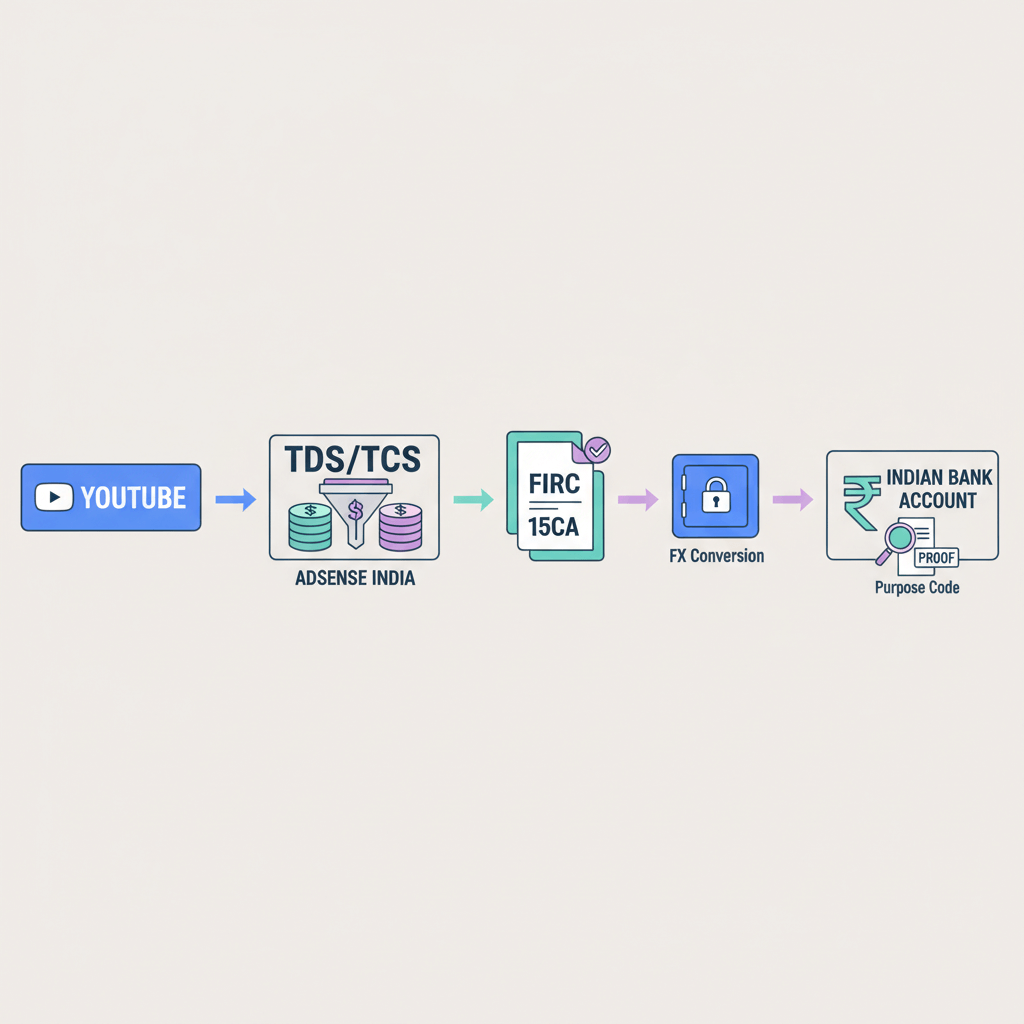
There are many projects and websites that can make from Google Adsense, like deborked.com. Once your earnings cross USD 100, Google processes payments around the 21st to 26th of the following month. The payment method is SWIFT wire in USD to your registered bank account in India. Funds usually arrive in 3 to 7 business days, sometimes longer if intermediary banks are slow.
Key identifiers to save
- Payment ID inside AdSense, your internal reference.
- SWIFT MT103 copy from your bank on request, the wire instruction trail.
- UTR on your bank statement, the Unique Transaction Reference for the credit.
These three connect your AdSense dashboard, your bank ledger, and your compliance documents.
Who sends the money
The remitter is usually Google LLC or a Google affiliate, this matters for FIRC because it proves export of services under RBI rules.
The complete cost stack, adsense payout fees, bank charges, and foreign exchange
Understanding bank charges on AdSense payments
- Intermediary or correspondent fees, typically USD 10 to 35, deducted before your bank receives the funds.
- Beneficiary bank inward fees, usually ₹200 to ₹1,000 plus GST, for processing the incoming wire.
- FX spread, banks credit at a markup, often 2 to 4 percent over the mid market rate, the largest hidden cost.
- Charge codes on the wire, OUR means sender pays fees, SHA means shared, BEN means you pay, most AdSense wires use SHA.
Worked example, where your money actually goes
Google sends USD 1,000 with SHA. An intermediary deducts USD 25, your bank receives USD 975. If the mid market rate is ₹83 but your bank uses ₹85.08, you get about ₹82,953 before local fees. After a ₹500 processing charge plus GST, your final credit is near ₹82,363. That is roughly a 4.6 percent total cost on a USD 1,000 payout.
Quick win: Call your bank’s forex desk before payday, ask for the TT Selling Rate and their published inward remittance fee. Document both.
Payment proof versus compliance proof, what actually counts
What qualifies as payment proof
- AdSense payment receipt PDF downloaded from your Payments, Transactions page.
- Bank statement entry with UTR, INR amount, and remitter details.
- SWIFT MT103 copy from your bank, shows the wire path and charge codes.
Most creators keep the AdSense receipt plus the bank statement for bookkeeping.
What is FIRC or e-FIRA and why it matters
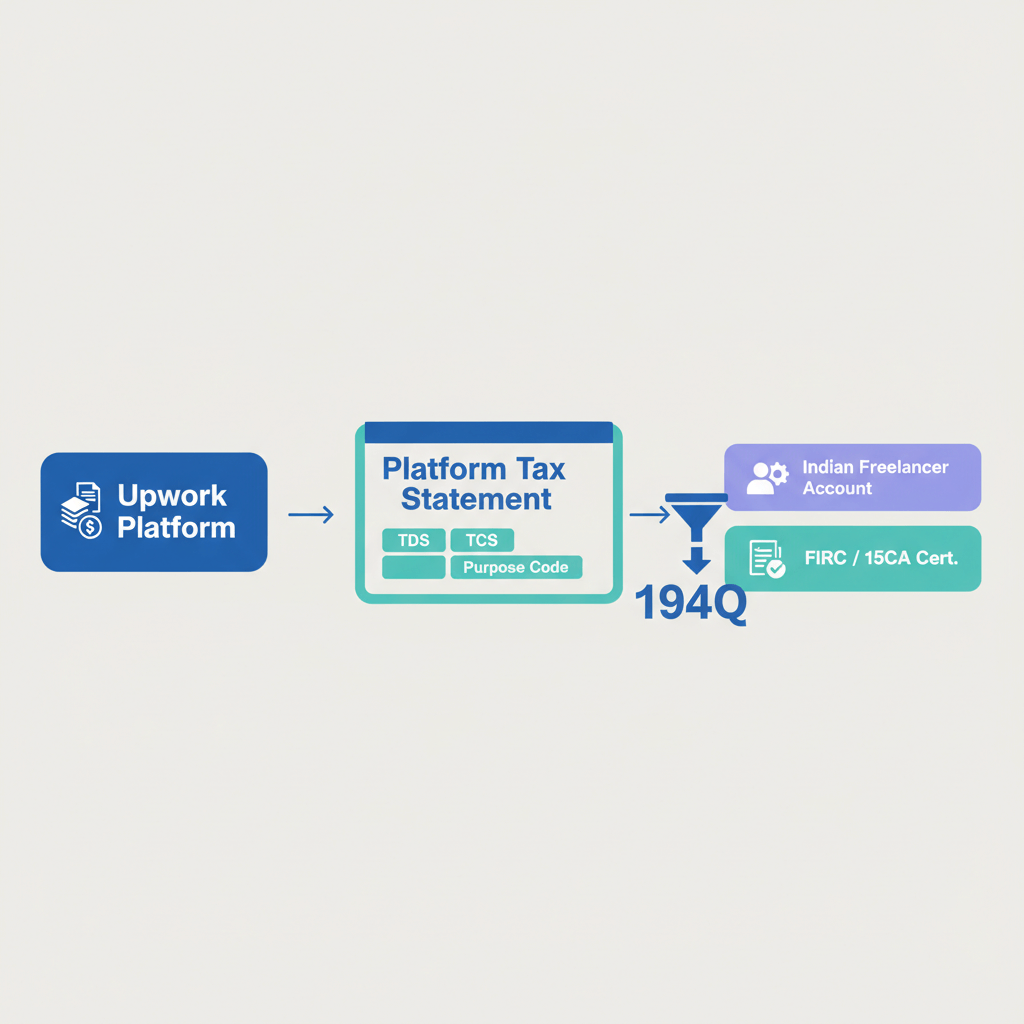
FIRC stands for Foreign Inward Remittance Certificate, e-FIRA is the digital version. Banks issue these as proof that foreign exchange was realized in India with the correct purpose code, they are often required for GST zero rating, income tax scrutiny, and large value RBI reporting. For another perspective, see this independent guide on AdSense payment methods in India.
Step by step, download AdSense payment proof and reconcile with your bank
- Open AdSense, go to Payments, then View transactions, select the payout, download the Payment receipt PDF.
- Check your bank app or statement for the credit 3 to 7 business days later, note the UTR, INR amount, date, and any separate fee entries.
- Create a simple tracker with columns for Payment ID, AdSense date, USD amount, UTR, INR credited, effective rate, and fees. Update it the day funds arrive.
- Flag anomalies, for example, larger correspondent fees, a higher than usual FX markup, or a new inward charge.
Monthly habit: Reconcile on the same day, it takes minutes and saves hours at tax time.
How to obtain FIRC or e-FIRA for AdSense remittances
Route 1, through your Indian bank
Apply after the credit appears. Visit or email your bank’s forex desk or trade finance team. Submit the AdSense receipt, the bank statement page showing the UTR, your KYC, and a purpose code declaration. Use P0807 for advertising and market research services, verify the latest RBI list when in doubt.
If asked for a tax invoice from Google, provide a self invoice or statement of services with the AdSense Payment ID as the reference. Escalate politely if needed. Turnaround times vary from a week in metro branches to two or three weeks elsewhere, fees are usually ₹100 to ₹1,000.
Route 2, using compliant fintech platforms
RBI authorized platforms that process inward remittances can auto issue e-FIRA within about 24 hours of INR settlement. Confirm that the document includes all mandatory fields, remitter, beneficiary, purpose code, amounts, UTR, and credit date. Platforms like Karbon Business provide auto e-FIRA when the remittance flows through their system.
Checklist for any FIRC or e-FIRA
Remitter exactly matches the Google entity on your receipt, beneficiary matches your legal name, USD and INR amounts match records, purpose code is correct, UTR and dates are present, and the document carries a bank or platform seal or digital signature.
Minimizing fees and delays for Google AdSense payments to India
Banking strategies
- Use a dedicated current account for export receipts, it simplifies FIRC issuance and audits.
- Negotiate FX margins, get your TT Selling Rate and markup in writing.
- Ask about using networks that support OUR charge code from the sender, results vary.
- Standardize P0807 documentation, keep a ready template with PAN and business description.
- Obtain the bank’s forex tariff upfront, avoid surprises.
Operational habits
- Maintain a monthly tracker covering Payment ID, dates, UTR, INR, effective rate, and fees.
- Set reminders, check AdSense on the 1st, bank credits around the 27th, FIRC requests by month end.
- Share the tracker with your CA quarterly, reconcile early, and file LUT annually if you are GST registered.
FX volatility options
High and consistent earners can consider currency holding within RBI limits or forward contracts with their bank to stabilize rates. For most creators, the biggest win is simply reducing FX markup and fixed fees.
Where Karbon Business can help Indian AdSense creators
Karbon Business focuses on foreign payments for Indian freelancers and creators. You can access a virtual USD account with SWIFT capability, transparent pricing with mid market FX and a flat platform fee, fast INR settlement, and auto e-FIRA within 24 hours. A typical USD 1,000 payout often costs near 1 percent end to end on Karbon Business, compared to 4 percent plus through traditional routes, based on common bank tariffs and markups.
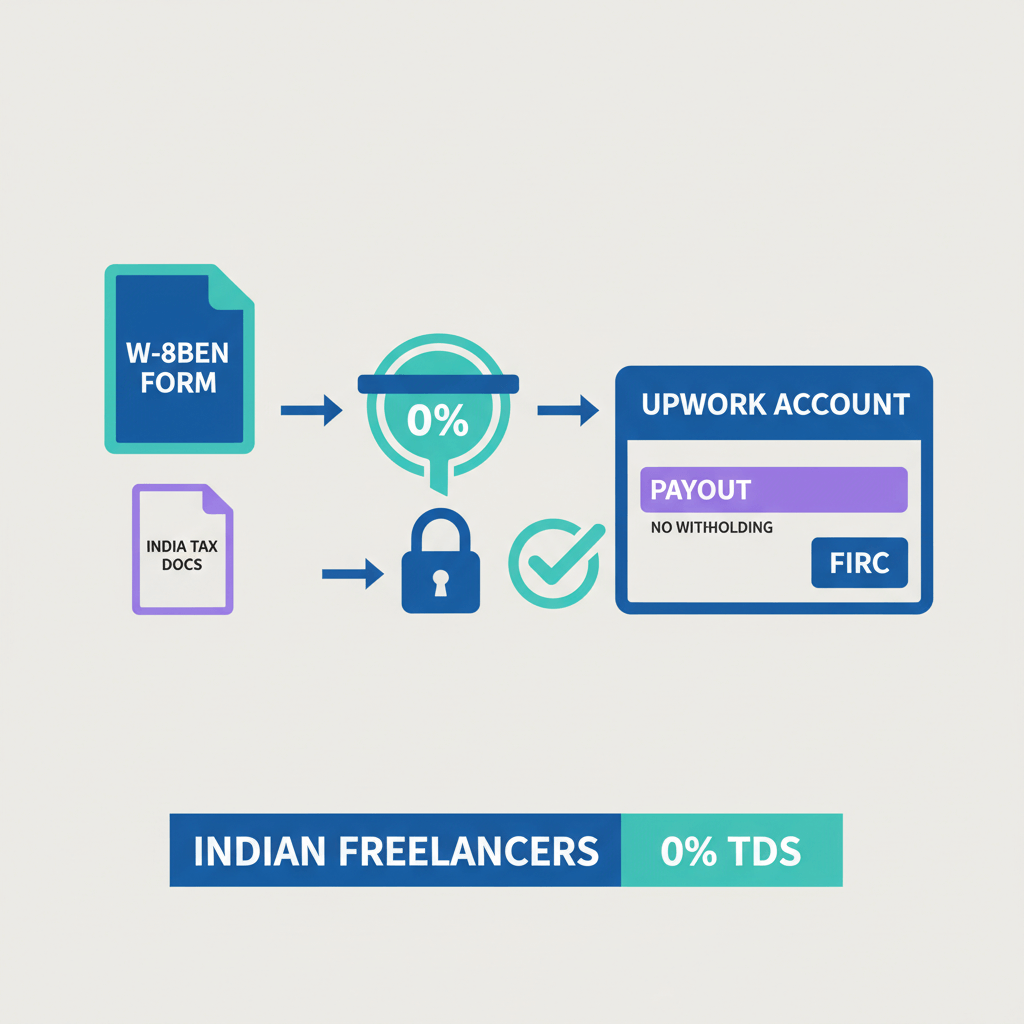
Before changing your payout method, confirm AdSense name matching and account compatibility with support, then test with one payout. The same setup also works for income from platforms like YouTube, Upwork, and Fiverr.
Templates and resources to simplify your workflow
Simple monthly tracker columns
Month, Payment ID, AdSense date, USD amount, Bank credit date, UTR, INR credited, Effective rate, Intermediary fee, Bank charge, Total cost percent, Receipt link, FIRC status.
Sample email for FIRC
Subject, Request for e-FIRA or FIRC for inward remittance, UTR [number]
Dear Forex Team,
Please issue e-FIRA or FIRC for the following credit,
Account, [number]
UTR, [number]
Credit date, [date]
USD amount, [amount]
INR credited, [amount]
Remitter, Google LLC or applicable affiliate
Purpose code, P0807, Advertising services
Attached, AdSense receipt, bank statement page, self invoice, PAN copy.
Regards,
[Your name], [contact]
Self invoice, statement of services
From, [Your name, address, PAN, GSTIN if any]
To, Google LLC, USA
Service, Online advertising monetization under Google AdSense
Reference, AdSense Payment ID [value]
Service period, [month and year]
Payment date, [per AdSense]
Amount, USD [value]
Received via, SWIFT wire, UTR [value], Receipt date [date]
Declaration, Export of services under FEMA and GST, zero rated under LUT if applicable.
Take action, audit your last three AdSense payouts
Pull your last three AdSense receipts and bank statements, fill your tracker, compute effective rates, and note total cost percent. If costs exceed 3 percent, negotiate your bank terms or explore platforms that offer mid market FX and auto e-FIRA. Organize FIRCs for higher value payouts, and set monthly reminders so compliance never piles up.
Disclaimer: Bank fees, exchange rates, and regulations change. Verify specifics with your bank and consult a chartered accountant for advice tailored to your situation.
FAQ
Do I really need a FIRC for every AdSense payment if my income is small?
Technically, a FIRC or e-FIRA is the RBI backed proof of foreign exchange realization, so it is ideal for every inward remittance. Practically, many small creators file their ITRs with the AdSense receipt and bank statement only. Once you grow, cross ₹20 lakhs, or register under GST, start collecting FIRC consistently. Platforms like Karbon Business auto issue e-FIRA within about 24 hours, which removes the hassle.
What is the usual time between AdSense processing and money reflecting in my Indian bank?
Google processes payments around the 21st to 26th, wires typically land in 3 to 7 business days. Public holidays and intermediary bank delays can push it to 10 days. If nothing arrives after 10 days, ask your bank for the incoming SWIFT MT103 using your name and date range, and verify the UTR once credited.
Why does the credited INR not match the Google or XE.com exchange rate?
Banks apply a spread over the mid market rate, often 2 to 4 percent. If mid market is ₹83, you might receive ₹85.08 per USD after a 2.5 percent markup, then your bank may also levy a processing fee. To reduce this, negotiate a published TT Selling Rate margin and keep that confirmation in writing, or use a platform like Karbon Business that converts at mid market with a transparent platform fee.
Is Google deducting any hidden adsense payout fees before sending my money?
No, Google does not deduct fees from your AdSense earnings. The gross USD amount on your AdSense Payments page is what they send. Deductions occur in the banking chain, correspondent fees, your bank’s inward fee, and FX markup. That is why reconciliation is essential.
How do I prove income quickly during tax scrutiny or while applying for a visa or loan?
Keep a monthly folder with, the AdSense receipt PDF, the bank statement page showing the credit and UTR, and the FIRC or e-FIRA. This trio satisfies most requests. If you struggle to obtain FIRC from your bank on time, using a provider that auto generates e-FIRA, such as Karbon Business, can speed things up dramatically.
Which purpose code should I use for AdSense earnings when asking the bank for FIRC?
Use P0807 for advertising, trade fair, market research, and public opinion polling services. Mention it clearly in your email or branch request. If a banker asks for an invoice from Google, share a self invoice referencing the AdSense Payment ID and explain that AdSense provides a payment advice, not a tax invoice.
What are the typical bank fees on AdSense wires, and how can I minimize them?
Common costs include USD 10 to 35 in correspondent fees, ₹200 to ₹1,000 for inward processing, and 2 to 4 percent FX spread. To reduce these, negotiate FX margins, use export friendly current accounts, request clarity on charge codes, and consider platforms that use mid market rates and auto issue e-FIRA. Many freelancers report total costs near 1 percent with Karbon Business compared to 4 percent or more via traditional routes.
My bank is asking for a Google invoice to issue FIRC, what do I do?
AdSense does not issue invoices to publishers. Provide the AdSense payment receipt, your bank statement with UTR, and a self invoice or statement of services referencing the AdSense Payment ID, service period, and USD amount. If the branch still insists, escalate to the forex or trade finance desk. Alternatively, route future payments through a provider that auto issues e-FIRA without this back and forth.
How can I calculate the real cost I am paying on AdSense payouts each month?
Compute your effective exchange rate, INR credited before local fees divided by USD received after any intermediary deduction, compare it to the mid market rate for that day. Then add local fees to get a total cost percent. Maintain a tracker with columns for USD amount, INR credited, effective rate, intermediary fee, bank charge, and total cost percent. If the number is consistently above 3 percent, consider switching banks or using Karbon Business for lower net cost.
Can I get a single quarterly FIRC instead of one for every monthly AdSense payment?
Some banks will issue a consolidated certificate if all remittances have the same purpose code and beneficiary details, but policies vary by bank and branch. Ask your forex desk about batch or periodic FIRCs. If you need speed and predictability, an auto e-FIRA from a platform like Karbon Business after each settlement is simpler and faster for GST refunds.
Does the SWIFT charge code, OUR, SHA, or BEN, affect how much I receive?
Yes. With OUR, the sender covers bank fees, you only face FX spread and local processing. With SHA, which is common, intermediary banks deduct their fees from the principal. With BEN, you bear all charges. You cannot usually control Google’s charge code, but knowing it helps you reconcile deductions and decide whether to optimize via your bank or a different receiving setup.
How do Indian freelancers keep documents tidy for audit, any quick system I can copy?
Use a simple folder structure, Year, Month, then save three files, AdSense receipt PDF, bank statement page with UTR, and FIRC or e-FIRA. Maintain one Google Sheet with Payment ID, dates, UTR, INR credited, effective rate, intermediary fee, bank fee, and total cost percent. Share it with your CA each quarter. If you want less admin, use Karbon Business for mid market FX and auto e-FIRA, then export everything from one dashboard during tax season.