



Key takeaways
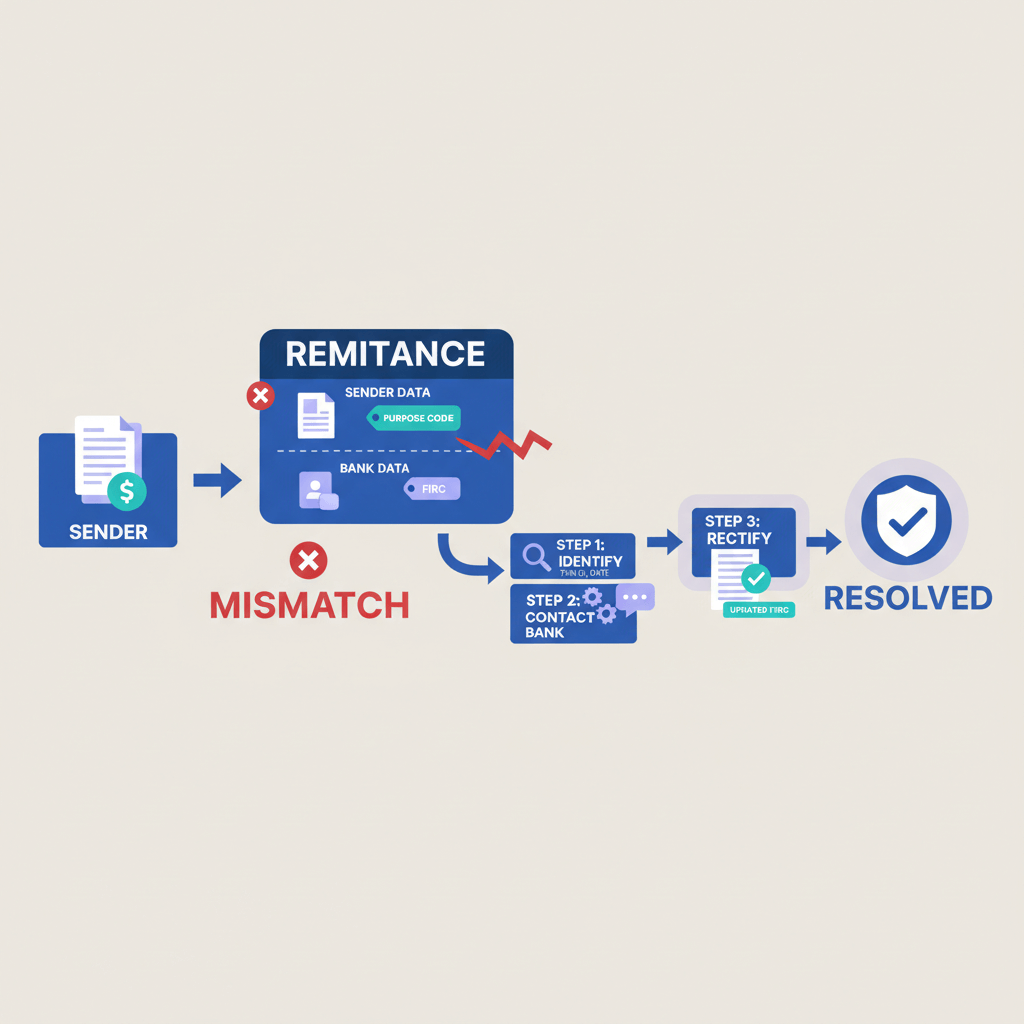
- purpose code mismatch? Read this, then act fast, evidence wins corrections. See purpose code mismatch.
- Karbon Business for invoice level purpose selection, automatic e-FIRA, and India first compliance.
Introduction
Picture this, you just wrapped a three month project for a UK client, the payment arrives, GBP converts to INR, the credit shows. A week later, you download the e-FIRA for your records.
That is when you spot it. Your invoice says software development services, but the bank document shows a consulting code, or worse, a personal remittance category. If you are dealing with a purpose code mismatch, here is exactly how to fix it with your bank step by step, even if you have never talked to the Forex desk before.
This guide gives you plain English purpose code 101, why wrong codes matter, a practical correction process with timelines, a complete evidence checklist, copy paste templates, and prevention tips where platforms like Karbon Business reduce such issues.
Let’s walk through the entire process, from spotting the problem to getting revised documents in hand.
What are purpose codes and why they exist
Purpose codes are RBI mandated classifications that explain why foreign money is coming into, or going out of, India. Think of them as labels regulators use to track the flow of foreign exchange for every international payment.
For Indian freelancers receiving export of services income, codes usually start with P, for example:
- P0802, software implementation and design services
- P0803, information and news agency services
- P1007, business and management consulting
- P0811, architectural, engineering, and other technical services
These codes support FEMA compliance, anti money laundering checks, tax and audit clarity, and India’s Balance of Payments reporting. See the RBI purpose code remittance compliance guide for context.
Where freelancers see purpose codes
- Bank credit advice, inward remittance advice that your bank issues with the INR settlement.
- FIRC or e-FIRA, the official proof of export earnings where the purpose code is clearly shown.
- Netbanking transaction details, sometimes visible in narration or remarks.
- Platform receipts, many payment tools ask you to pick a purpose at account setup or invoice creation, see payment purpose codes.
Always confirm code names and numbers against your bank’s latest RBI list, descriptions can change, new categories are added.
How purpose code mismatches happen
- Bank staff auto select a default code when payment description is vague, they may pick a generic consulting code.
- Aggregators pass a generic code, legacy or broad categories can misrepresent the exact service you delivered.
- Client’s remitting bank forwards limited information, the receiving bank guesses the purpose based on sparse details.
- You picked the wrong option on a platform during withdrawals or conversions, that choice propagates to documents.
For a deeper look, see this wrong purpose code guide.
Edge cases include refunds or chargebacks that confuse return flows, and mixed services in one payment where only one code can be applied.
How to confirm a purpose code mismatch quickly
Step 1, get the documents
Download or request your e-FIRA or FIRC, and the bank credit advice for the specific transaction. Most banks provide e-FIRA within 24 to 48 hours of credit.
Step 2, locate the purpose code
Find the field labeled Purpose Code on the e-FIRA or credit advice, it will show a code like P0802 with a description.
Step 3, compare with your documents
Match the bank’s code against your invoice, contract or scope, and records of deliverables. Does the code reflect what you actually did?
Step 4, check the bank’s current list
Ask your branch or Forex desk for the latest RBI purpose code PDF, cross reference your invoice, the code on e-FIRA, and the correct code you believe applies. For background, see the RBI purpose code remittance compliance guide.
Step 5, optional deeper check
Request the SWIFT MT103 message if available, fields 70 or 72 carry remittance information, compare with any platform receipt from Upwork, Fiverr, Stripe, or others.
Why fixing a purpose code mismatch matters
Compliance and FEMA reporting
Wrong codes mean incorrect export of services reporting to RBI, repeated mismatches can flag reviews, see the RBI purpose code remittance compliance guide.
Tax and audit trail
Your CA reconciles invoices, bank statements, e-FIRA or FIRC, if your documents disagree, audits become painful. Read more on payment purpose codes.
Future banking friction
Banks track patterns, inconsistent codes can lead to holds, extra documentation requests, or conservative limits.
Export benefits and schemes
Duty drawbacks or export incentives can get complicated if the nature of earnings does not match official records.
The good news, corrections are possible
Some teams say codes cannot be changed once reported, yet many banks allow corrections with proper proof, especially when you act quickly. See payment purpose codes for examples.
Step by step, purpose code mismatch, how to fix with your bank
Step 1, identify wrong versus correct code
Note the wrong code exactly as shown on e-FIRA, FIRC, or credit advice, then the correct code you believe applies based on the bank’s RBI list and your actual service.
Step 2, gather evidence
Prepare a complete packet so your request is one and done, banks move faster when everything is attached.
Step 3, raise the correction request
Email the branch or relationship manager, visit the branch, or use the bank’s service request portal, include the UTR, amount and currency, credit date, wrong code, and proposed correct code.
Step 4, submit declaration and proofs
Provide a signed one page declaration stating the mismatch, the actual nature of services, the wrong code and correct code, and that no other regulatory details change. Attach invoices, contract or scope, platform receipts if any, the current e-FIRA or FIRC, and other proof.
Step 5, track and respond
Typical turnaround is 1 to 7 working days, be ready to clarify, resend PDFs, or confirm details by phone or email. Stay polite and concise.
Step 6, obtain revised documents
Ask for a revised e-FIRA or FIRC showing the correct code, or a revised credit advice or amendment letter. Save both old and revised copies for audit defense.
Step 7, update internal records
Share with your CA or bookkeeper, update any invoice to remittance tracker, mark the issue resolved.
Understanding the bank correction process in detail
Channels and workflow
Your request flows from branch or RM, to the internal Forex or remittance desk, then to the operations team that handles RBI reporting, each stage reviews your documents.
Timelines and windows
- Recent, simple transactions, 1 to 3 working days.
- Older or batch corrections, up to 7 working days or longer.
- Bank imposed windows, ask about deadlines like 30 days from credit, or same quarter rules.
Possible fees
Banks may charge amendment or re issuance fees, usually small and subject to GST, ask upfront.
Internal re reporting to RBI
Changing a purpose code can trigger amended filings, hence the insistence on solid documentation.
If payment came via PayPal, Wise, Payoneer, or other platforms
The bank may request the platform’s FIRC or e-FIRA and classification details, sometimes the platform must re issue the FIRC or provide a letter explaining the payment nature.
Evidence needed, full checklist
Signed request letter or declaration
Include your name and account, UTR or reference, amount, currency, credit date, wrong code, requested correct code, short reason for the mismatch, and a statement that all other details remain unchanged.
Invoice(s) for the payment
Show scope clearly, invoice number, date, currency, your business or freelancer name, client name and country.
Contract, purchase order, or statement of work
Even an email confirming scope works, link services delivered to the invoice.
Bank credit advice and FIRC or e-FIRA
Attach the credit advice with UTR and current code, plus the e-FIRA or FIRC.
SWIFT MT103 or client confirmation
Fields 70 and 72 in MT103 clarify remittance information, or provide a client payment confirmation.
Platform receipt
Include screenshots or invoices from Upwork, Fiverr, Stripe, or similar tools, along with project descriptions or milestones.
Your KYC documents, if asked
PAN, GSTIN if applicable, and address proof, keep them ready.
Basic client details
Client name, country, website if requested, usually a simple one line note suffices.
Any extra proof
Project dashboard screenshots, email threads, delivery confirmations, the goal is zero doubt about the service nature.
Email and declaration templates you can copy and paste
Email template
Subject: Request to correct purpose code for inward remittance, [UTR Number], [Amount/Currency]
Body:
Dear [Branch Manager, Relationship Manager, Forex Desk],
I am [Your Full Name], a freelance [profession], holding account number [Account Number] at your [Branch Name] branch.
I received an inward remittance on [Credit Date] with the following details,
UTR or Transaction Reference, [UTR]
Amount, [Amount in Foreign Currency]
INR Credit, [INR Amount]
Current Purpose Code on e-FIRA or Credit Advice, [Wrong Code and description]
The actual nature of services was [Brief Description], which should be classified under [Correct Code and description].
I request you to correct the purpose code from [Wrong Code] to [Correct Code] and issue a revised e-FIRA or FIRC or credit advice.
I have attached, signed declaration, invoice(s), contract or scope confirmation, copy of existing e-FIRA or credit advice, and any platform receipt or SWIFT copy.
Please let me know if any further clarification or documentation is required, I am available at [Phone Number] or [Email].
Regards,
[Your Full Name]
[Address]
[PAN Number]
[Phone Number]
Declaration letter template
[Your Full Name]
[Address]
[City, State, PIN]
[Phone Number]
[Email Address]
[PAN Number]
Date, [Date]
To,
The Branch Manager or Forex Manager
[Bank Name]
[Branch Address]
Subject, Request for correction of purpose code for inward remittance, UTR [UTR Number]
Dear Sir or Madam,
I, [Your Full Name], holding account number [Account Number], received an inward remittance on [Credit Date] with the following details,
UTR or Reference Number, [UTR]
Amount, [Foreign Currency Amount]
INR Equivalent Credited, [INR Amount]
Purpose Code currently on record, [Wrong Code and description]
The applied purpose code is incorrect.
Actual nature of services provided
I provided [specific description], to my client [Client Name], based in [Client Country], as per the attached invoice and contract.
The correct RBI purpose code should be [Correct Code and description], instead of the currently recorded [Wrong Code].
Request for correction
Kindly correct the purpose code from [Wrong Code] to [Correct Code] in your records and RBI reporting, then issue a revised e-FIRA or FIRC or credit advice reflecting the correct purpose code.
Declaration
This discrepancy is unintentional, it occurred due to [brief reason], all other transaction details remain unchanged, the information provided is true and accurate to the best of my knowledge, I am aware of implications of false information.
Attachments, invoice(s), contract or statement of work or email confirmation, copy of existing e-FIRA or credit advice, and other documents as applicable.
Kindly advise if any additional information is required.
Yours sincerely,
[Signature]
[Your Full Name]
[Date]
Troubleshooting and edge cases
Bank says the correction window has elapsed or cannot change codes
Ask for a written policy or the RBI circular, request escalation to branch manager or nodal officer, strengthen proofs with a CA letter or client confirmation, and at minimum request a written clarification acknowledging the discrepancy if re issuance is denied.
Mixed services in one payment
Request a split if your bank supports multiple codes with an annexure, if not, use the dominant service, keep an internal breakdown for your CA with reasoning.
Broad retainer or ongoing scope
Provide a monthly statement of work showing actual tasks, pick the code representing the majority of work, add scope summaries to invoices going forward.
Refunds and chargebacks
Maintain a full paper trail, original invoice and FIRC, refund remittance advice or SWIFT copy, reversal e-FIRA or credit note if applicable, and emails with the bank, correct refund coding using the same process if required.
Preventing future purpose code mismatches
Put the intended purpose code on every invoice
Add a simple footer, Payment Details, your account info, RBI Purpose Code, intended code and description, and a clear payment description with invoice number.
Share a one page payment instructions PDF with new clients
Include your identity and bank details, exact RBI purpose code, and a recommended payment reference text, most clients comply and errors drop.
Ask foreign clients to use a clear payment description
Politely request they include service description and invoice number in their payment reference.
Maintain a standard evidence folder per client
Keep contracts, invoices, confirmations, e-FIRAs, and platform screenshots in one place, this makes corrections faster.
Use tools that let you pick purpose code per invoice
Prefer platforms that allow purpose selection at invoice level, auto generate e-FIRA quickly, and provide compliance support.
Where Karbon Business fits, without the hard sell
Managing international payments as an Indian freelancer involves invoices, conversion, compliance, and documentation, purpose code mismatches are a symptom of broken workflows. Platforms built for India first compliance can reduce errors dramatically.
- Invoice level purpose selection, you choose the correct code while creating the invoice or payment link.
- Automatic e-FIRA within roughly 24 hours, you catch errors early while correction windows are open.
- Responsive WhatsApp and email support, a team that understands RBI norms and freelancer realities saves time.
- India first compliance, workflows align with FEMA and export of services rules.
Karbon Business offers virtual business checking accounts in USD, GBP, EUR, and CAD, local transfers, INR settlement in 24 to 48 hours, automatic e-FIRA generation, and a flat 1 percent platform fee with zero FX markup. Learn more at Karbon Business.
You can also explore Wise Business, Payoneer, RazorpayX International, or Revolut Business subject to India availability, compare fees, currencies, and accounting integrations, pick the solution that minimizes manual errors and delivers fast documentation.
FAQ
How long does a purpose code correction take for freelancers in India?
For recent payments with complete documentation, banks typically process corrections in 1 to 3 working days, older transactions or complex cases can take up to 7 working days or longer, always ask your branch about their correction window and fees.
Can I change the purpose code on e-FIRA after quarter end or year end?
Many banks allow corrections within the same financial year, after that, stronger justification may be required, for example a CA letter confirming the nature of services, raise the request as soon as you spot the error, do not wait for filing season.
Bank said purpose code cannot be changed, what is the practical workaround?
Request the written policy or circular, escalate to the branch manager or nodal officer, add more evidence, invoices and scope details, SWIFT copy, client confirmation, if re issuance is denied, ask for a written acknowledgement of the discrepancy for audit defense.
Will correcting the purpose code affect my income tax or GST?
No, the correction aligns documents with reality, your income remains the same, your GST and tax reporting gets cleaner, reduced audit risk, share revised e-FIRA or credit advice with your CA to update work papers.
What documents do banks prefer for quick purpose code corrections?
A signed declaration, invoice, contract or statement of work, e-FIRA or credit advice showing the wrong code, platform receipts if applicable, and SWIFT MT103 copy if available, complete packets get faster approvals.
My client sent personal remittance with an S code, can this be corrected to a P code?
It is possible but trickier, provide strong evidence, invoice and contract proving business payment, client confirmation that it was for services, and a clear declaration, the bank may escalate internally and ask for more documents, expect longer timelines.
How do I pick the right RBI purpose code for Upwork or Fiverr payments?
Match the code to the dominant service delivered, for example software implementation under P0802, architectural or engineering under P0811, include the intended code on your invoice and in platform notes, tools like Karbon Business let you select the code per invoice which reduces mistakes.
What is the typical fee for re issuing e-FIRA or correcting a purpose code?
Banks often charge a small amendment or re issuance fee, usually a few hundred rupees plus GST, confirm the fee before submitting, decide whether to fix minor mismatches or only critical ones based on materiality.
Can I split one inbound payment across multiple purpose codes?
Some banks support splitting with an annexure that maps amounts to service types, most apply one code per payment, if splitting is not possible, choose the majority service, document the internal breakdown for your CA.
How fast can platforms issue e-FIRA so I can catch errors early?
Platforms focused on India compliance aim for e-FIRA within 24 to 48 hours, for example Karbon Business auto generates e-FIRA roughly within 24 hours, early visibility helps corrections within bank windows.
What should I include on my invoice to avoid future mismatches?
Add a payment details block with your bank account, the intended RBI purpose code and description, and a clear payment reference text, clients and their banks process faster with less guesswork.
If I am a new freelancer, how do I ensure clean compliance on international payments?
Use a platform that lets you pick the purpose code at invoice level, keep a standard evidence folder, send payment instructions to clients, and review e-FIRA or credit advice for every payment, Karbon Business is one option that aligns workflows to India first compliance, with support when issues arise.
Will my bank ask for KYC again during correction?
Usually your KYC is already on file, some banks may request PAN, GSTIN, or address proof for older transactions or audits, keep scanned copies ready to avoid delays.
What if the mismatch was created by my payment platform’s default code?
Provide platform receipts and project descriptions, request the platform’s FIRC or e-FIRA with correct classification if possible, and submit your declaration with all proofs, platforms built for India compliance, for example Karbon Business, reduce such defaults by letting you pick codes per invoice.
Recap and next steps
Confirm the mismatch by comparing e-FIRA or credit advice against your invoice, contract, and the bank’s RBI list, identify the correct code, assemble a complete evidence packet, then send a clear email and signed declaration to the Forex or remittance team, track and respond quickly, obtain revised documents, and update your records with your CA.
Ready to act? Download the templates above, fill your transaction details, attach proofs, and raise the correction request today.
Want fewer corrections? Consider managing international invoicing and collections with a platform designed for Indian freelancers, Karbon Business lets you select the purpose code upfront, receive into virtual USD, GBP, EUR, or CAD accounts, and get automatic e-FIRA quickly, with flat fees and zero FX markup.
Purpose code mismatches are fixable, with the right documentation and a clear process, you can get your records corrected and move forward confidently. Save this guide, use the templates, and never let a wrong code sit uncorrected in your files again.
