

Key takeaways
- GitHub Sponsors in India is fully live, individual developers and organizations can get paid in INR after completing Stripe KYC, PAN verification, and bank linking.
- Expect combined deductions from platform fees, processing fees, and FX conversion, your net can be 10 to 15 percent lower than gross pledges.
- Keep monthly statements from GitHub and Stripe, plus your bank statements and simple invoices, these form your primary tax and audit trail.
- For GST zero rated exports, file a Letter of Undertaking (LUT) and maintain foreign income proof, or use alternative proofs if settlements arrive as INR domestically.
- If e FIRA is not issued by your bank, use Stripe payout advice, GitHub reports, bank credits, and your invoices as a combined proof set.
- Common payout blockers are name or PAN mismatches and bank detail errors, fix details in Stripe, then wait for re verification.
- Consider a direct international payment channel for clients alongside Sponsors, for faster INR settlement, predictable fees, and easy compliance proofs.
Why this guide matters
Picture this, you enable GitHub Sponsors, supporters start pledging, weeks pass, and the payout still shows pending. GST season hits, the tax officer asks for proof of foreign income, and you are unsure which documents count. This guide turns that panic into a checklist, showing exactly how GitHub Sponsors payouts in India (how it works), what you pay in fees, and which records prove your income during audits.
No jargon, no fluff, just a clear path from Enable Sponsors to money in your Indian bank account.
Availability and eligibility
GitHub sponsors India is open to individual developers and organizations with a GitHub account in good standing and an Indian bank account. The setup is straightforward if your paperwork is accurate.
- GitHub account with 2FA, turn on two factor authentication before applying.
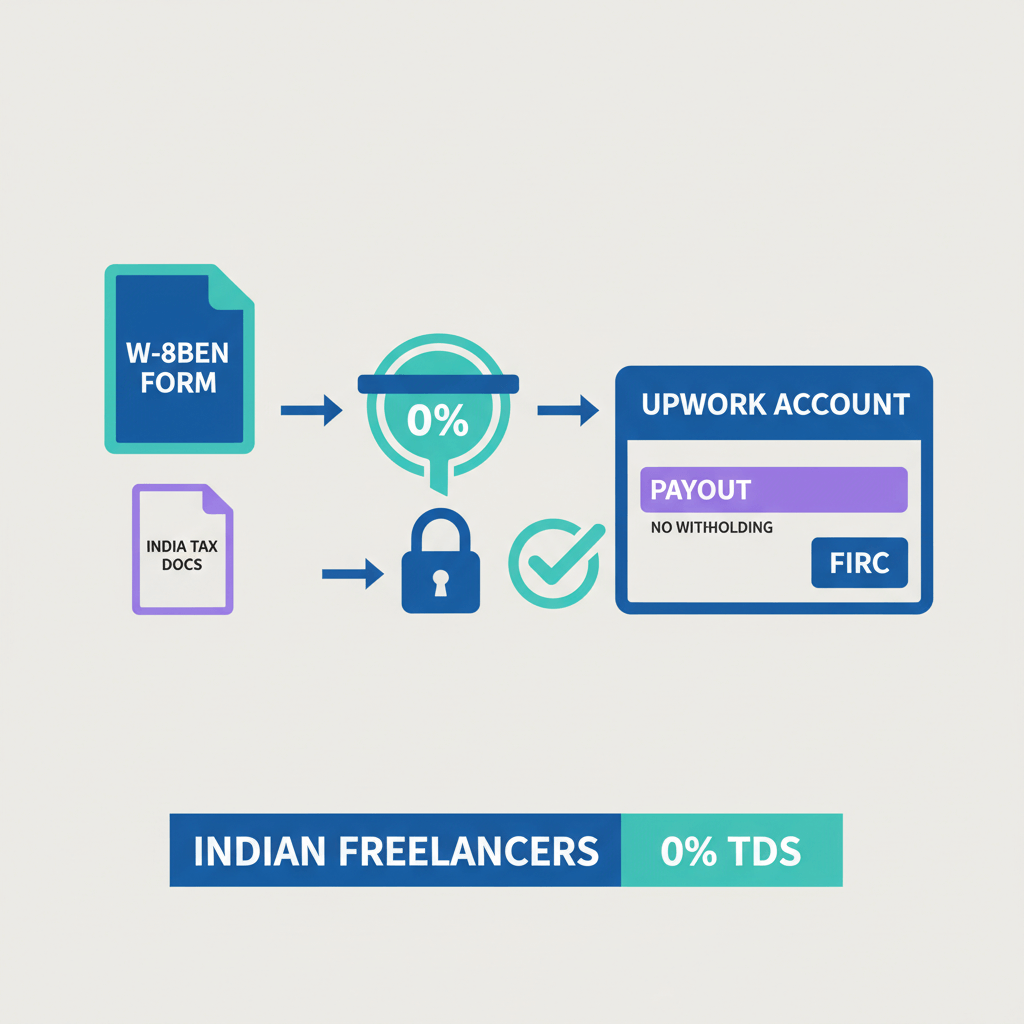
- PAN for KYC, during Stripe Connect onboarding, submit PAN and identity details, non US persons complete Form W 8BEN.
- Indian bank account, savings or current, the account holder name must exactly match PAN and your GitHub legal name.
After review, your Sponsors profile goes live and you can start receiving pledges.
GitHub Sponsors payouts in India, how it works
Step by step setup
- Create your Sponsors profile and tiers, add a bio, showcase key repos, set monthly or one time tiers like ₹500, ₹1,000, or custom.
- Connect Stripe, complete KYC with exact name matching your PAN and bank account.
- Add and verify bank, enter account number and IFSC, confirm micro deposits in Stripe.
- Choose payout schedule and threshold, many developers use monthly with a minimum balance to avoid tiny payouts.
- Go live, submit for review, then start receiving support.
Where the money goes
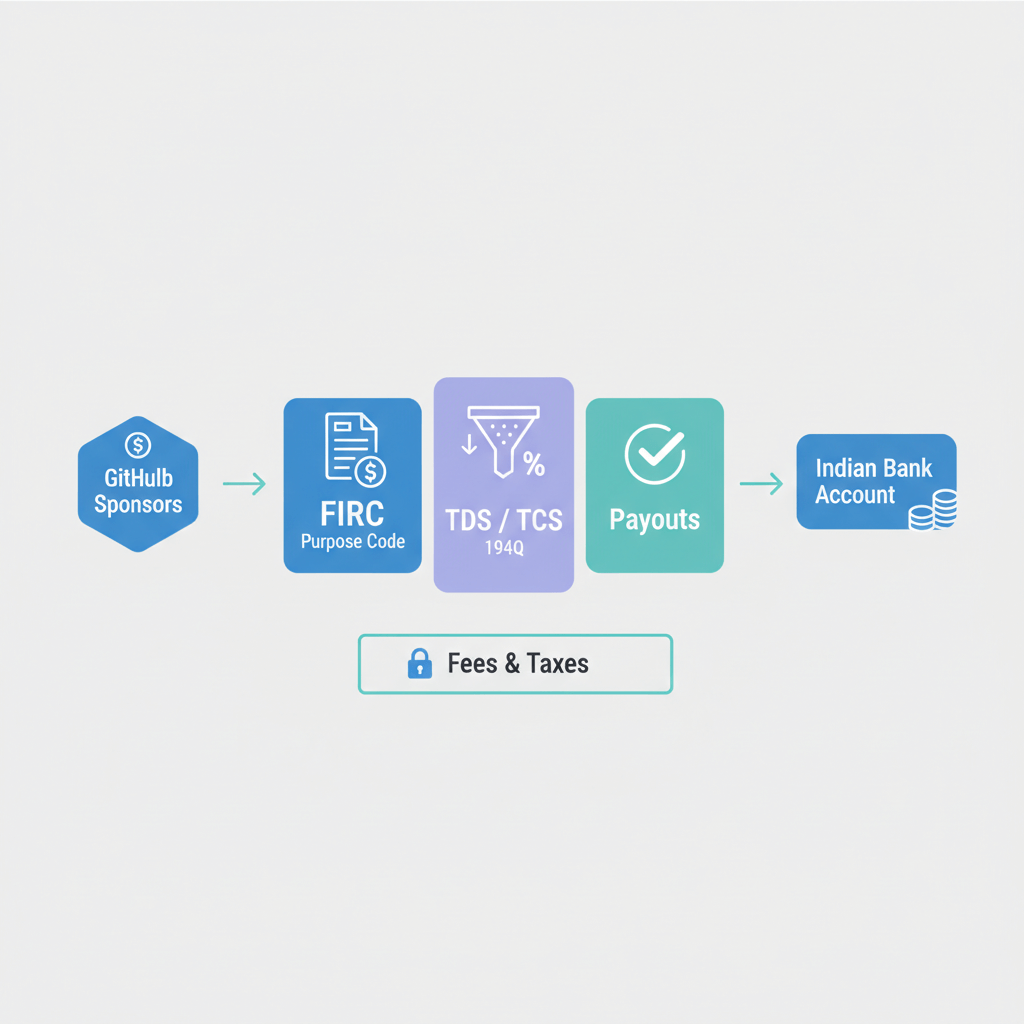
A sponsor pays your tier, GitHub processes the charge, funds batch to Stripe, Stripe converts USD or EUR to INR using its rate, then sends INR to your Indian bank via IMPS or NEFT. Track gross in GitHub, track fees and net in Stripe, and reconcile with your bank credits.
Timelines, first payout can take a few weeks due to KYC and batching, after that, expect 7 to 15 days from cycle close, depending on holidays and bank processing.
Note, you cannot receive GitHub Sponsors payouts in USD in India, Stripe converts to INR before settlement.
Payout fees you should expect
- Platform fee, up to 6 percent of gross for organizations, sometimes lower for individuals, confirm current policy in your dashboard.
- Processing fees, Stripe and networks, around 2.9 percent plus a fixed amount for cards, PayPal may differ.
- FX conversion margin, Stripe applies a conversion rate slightly below mid market, effectively reducing the INR you receive.
- Bank receiving fees, usually zero or minimal for IMPS or NEFT credits.
How to read statements, GitHub shows gross pledges, Stripe shows fees, FX rate, and net payout, your bank shows the credited INR. Reconcile monthly.
Illustrative example, a $100 pledge, after platform and processing fees, and FX at roughly the batch rate, your net could be near ₹7,600 to ₹8,200 depending on the day and mix of fees. Always verify actuals in Stripe.
Taxes and compliance for Indian freelancers
Treat sponsorships as business or professional income. Many solo developers use presumptive taxation under Section 44ADA via ITR 4, others file ITR 3 with actual expenses. Pay advance tax if your annual liability exceeds ₹10,000. Keep complete records of all payouts and bank credits.
GST, register if you cross the threshold, if you provide services to foreign sponsors as perks, this can qualify as export of services, zero rated under GST when you file a Letter of Undertaking (LUT) and the payment is received in foreign exchange. If settlement lands as INR domestically through Stripe India, discuss documentation alternatives with your CA to substantiate foreign origin.
Documents you must keep
- GitHub and Stripe statements, download monthly, they show gross, fees, FX, and net.
- Bank statements, highlight Stripe or GitHub references that match the net payouts.
- Invoices or receipts, issue a simple invoice per pledge or per month for your records, share with sponsors if they request.
- Tier descriptions and emails, preserve screenshots and agreements that describe what sponsors receive.
- CA reconciliation sheets, retain the workbook tying platform data to ITR figures.
Proof of foreign income and e FIRA or FIRC
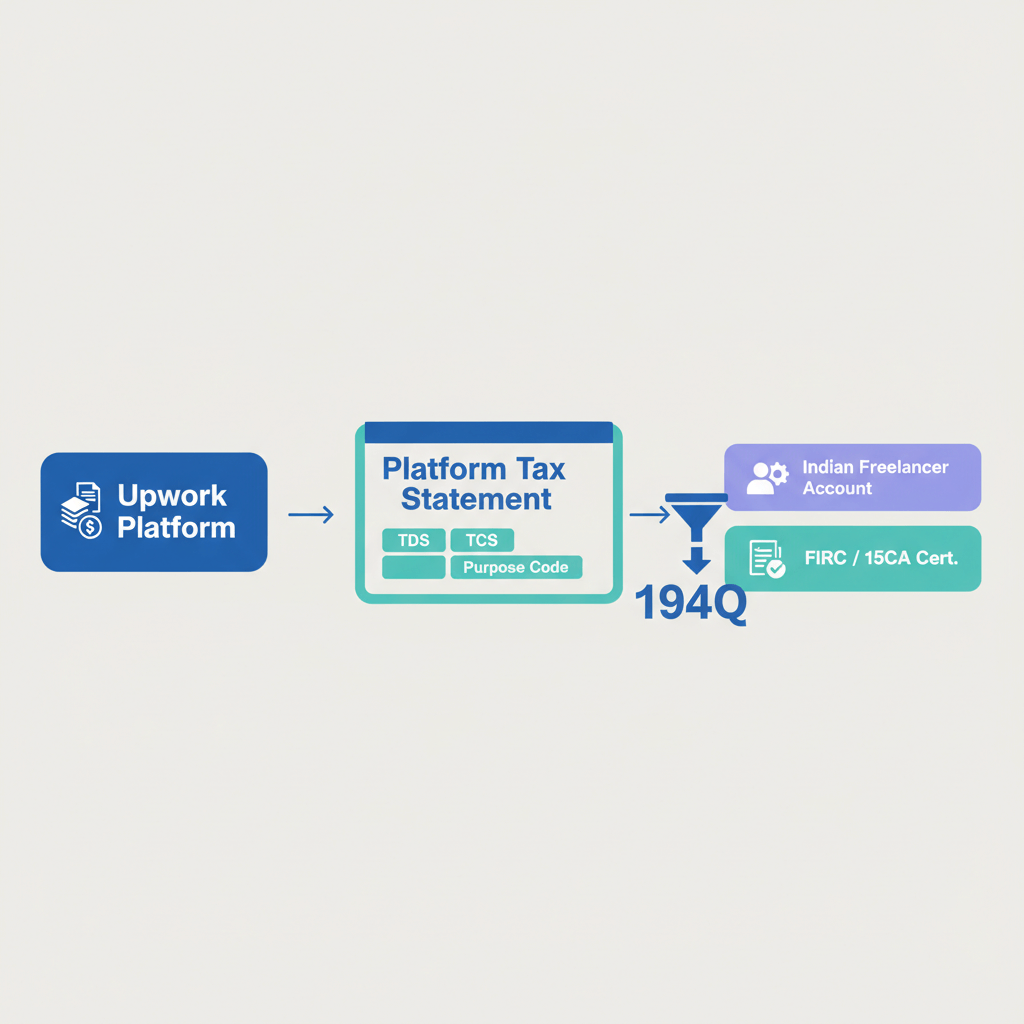
Traditional exports are evidenced by e-FIRA or FIRC from your bank’s Authorized Dealer branch. With GitHub Sponsors via Stripe, your bank may not issue e FIRA if the final settlement arrives as a domestic INR transfer from Stripe India.
If you do not receive e FIRA
- Use alternative proofs, Stripe payout advice with original currency, GitHub statements showing sponsor countries, your bank credit entries, and your invoices together establish foreign origin.
- Purpose codes when available, for software and IT services, banks often use P0801, for professional services, S0001, align with the nature of your work.
- Retention, keep all records for at least eight to ten years, digital copies are fine, back them up.
Proof is a bundle, not a single sheet, assemble the story of money flowing from a foreign payer to your Indian bank, month by month.
Common India specific issues and fixes
- Name or PAN mismatch, ensure your GitHub legal name, PAN, and bank name match exactly, including middle names and initials, then resubmit KYC in Stripe.
- Failed payouts, verify IFSC, account number, and account type, re confirm micro deposits in Stripe.
- Unusual delays, holidays and extra KYC checks can slow things, if more than 45 days pass, contact GitHub Support with your Stripe payout ID.
- Chargebacks, reconcile as reduced income, keep polite communication with sponsors, document reversals.
- FX confusion, check Stripe’s applied rate and batch timing, remember fees and conversion margins are embedded in the net.
- No e FIRA from bank, use the alternative proof bundle, brief your CA on Stripe India domestic settlement.
- GST on perks, if perks are services, determine place of supply and eligibility for zero rating with your CA.
Beyond GitHub Sponsors, faster direct payments
Pair Sponsors with a direct invoicing channel when you consult, sell support, or need faster settlement, predictable fees, and clear compliance documents.
- Why direct invoicing, faster INR in 24 to 48 hours, auto e FIRA, and mid market FX can improve net receipts.
- Example, Karbon Business, virtual USD, GBP, EUR, and CAD accounts let clients pay locally via ACH, SEPA, or FPS, you claim funds and receive INR in 24 to 48 hours, platform fee about 1 percent with zero FX markup, and e FIRA is auto generated, you can hold currency briefly to hedge rates.
- Other options, Wise Business, Payoneer, PayPal, or invoice based flows with RazorpayX International or Tazapay, compare costs, speed, and documentation.
The goal is a diversified payment stack so that a delay or policy change in one channel does not block your income.
Quick checklist for Sponsors payouts
- Enable Sponsors and publish clear tiers.
- Complete KYC with exact PAN and legal name match across GitHub, Stripe, and bank.
- Add and verify your Indian bank via micro deposits.
- Set payout schedule and a sensible threshold.
- Download GitHub and Stripe statements monthly, reconcile with bank credits.
- Issue simple invoices, store all tax docs and tier descriptions.
- Bundle quarterly proof sets for audits, Stripe plus GitHub plus bank plus invoices.
- Review GST, exports, and LUT with your CA, do not guess.
- Add a direct international payment option for client work.
Final thoughts
Navigating GitHub Sponsors payouts in India (how it works) becomes simple when you standardize your setup, monitor fees, and build a monthly documentation habit. Fix name mismatches, reconcile diligently, and keep a secondary payment rail for client work. Your open source deserves steady support, make sure it reaches your account, quickly and compliantly.
FAQ
Is GitHub sponsors India live for individual developers or only for organizations?
It is fully live for both, individuals and organizations with Indian bank accounts can apply, complete Stripe KYC with PAN, and receive payouts in INR without a waitlist.
How much fees get cut from my GitHub Sponsors payouts in India?
Plan for platform fees up to 6 percent, processing fees around 2.9 percent plus a fixed amount, and an FX margin during conversion, together this often totals 10 to 15 percent of gross pledges, verify exacts in your GitHub and Stripe dashboards.
Can I receive my GitHub Sponsors money in USD instead of INR in India?
No, Stripe converts foreign currency to INR before settlement to Indian bank accounts, if you need to hold USD for client work, consider a separate solution like Karbon Business or Wise Business.
What documents should I keep for ITR and GST if I am getting Sponsors income?
Download GitHub and Stripe statements monthly, keep bank statements showing the INR credits, issue simple invoices, and save tier descriptions or email agreements, these together support ITR and GST filings.
My bank is not giving e FIRA for Stripe payouts, how do I prove foreign income?
Use a bundle, Stripe payout advice with original currency and FX, GitHub sponsor reports with sponsor countries, your bank statement showing the credit, and your invoices, this combined evidence works for audits when domestic settlement prevents e FIRA.
Do I need GST registration for GitHub Sponsors if I am a solo developer under ₹20 lakh turnover?
Below threshold you are typically not required to register, once you cross the limit, consult a CA to assess export of services treatment, LUT, and documentation if your perks qualify as services for foreign sponsors.
What should I do if my GitHub Sponsors payout is delayed for more than a month?
Check both GitHub and Stripe dashboards for KYC prompts or error codes, confirm bank details, and if it exceeds 45 days, raise a ticket with GitHub Support including your Stripe payout ID and a clear timeline.
Which name details must match for Stripe KYC to avoid payout failures?
Your GitHub legal name, PAN name, and bank account holder name must match exactly, including middle names and initials, fix any mismatch, re upload documents, and wait for Stripe re verification.
How do I reconcile amounts when the INR I received is lower than expected from USD pledges?
Open the Stripe payout details to see the applied FX rate and time of batch, add platform and processing fees, the combination explains the gap, maintain a spreadsheet mapping gross, fees, FX, and net to your bank credit.
I also do freelance consulting, what is a faster way to get paid internationally with proper proofs?
Use a direct invoicing platform that gives you local collection accounts and quick INR settlement with e FIRA, for example, Karbon Business provides virtual USD, GBP, EUR, and CAD accounts, mid market FX, about 1 percent fee, and auto e FIRA within 24 to 48 hours.
For GST zero rated exports, is LUT required if Stripe settles to me in INR?
LUT supports zero rating when foreign exchange is received, if final settlement is INR domestically, work with your CA to use alternative proof of foreign origin like Stripe statements and GitHub reports, and document the export of services position carefully.
Can I issue one monthly invoice covering all GitHub Sponsors for that month instead of per pledge?
Yes, many freelancers issue a consolidated monthly invoice describing open source sponsorship support for the month, attach or reference GitHub and Stripe statements, then reconcile to the single net bank credit for clean records.