



Key takeaways
- Education remittance is allowed under the Liberalised Remittance Scheme up to USD 250,000 per person, per financial year, plan early and track your limits.
- Prepare documents upfront, PAN, admission letter, fee invoice, passport, visa, and Form A2 are typically required.
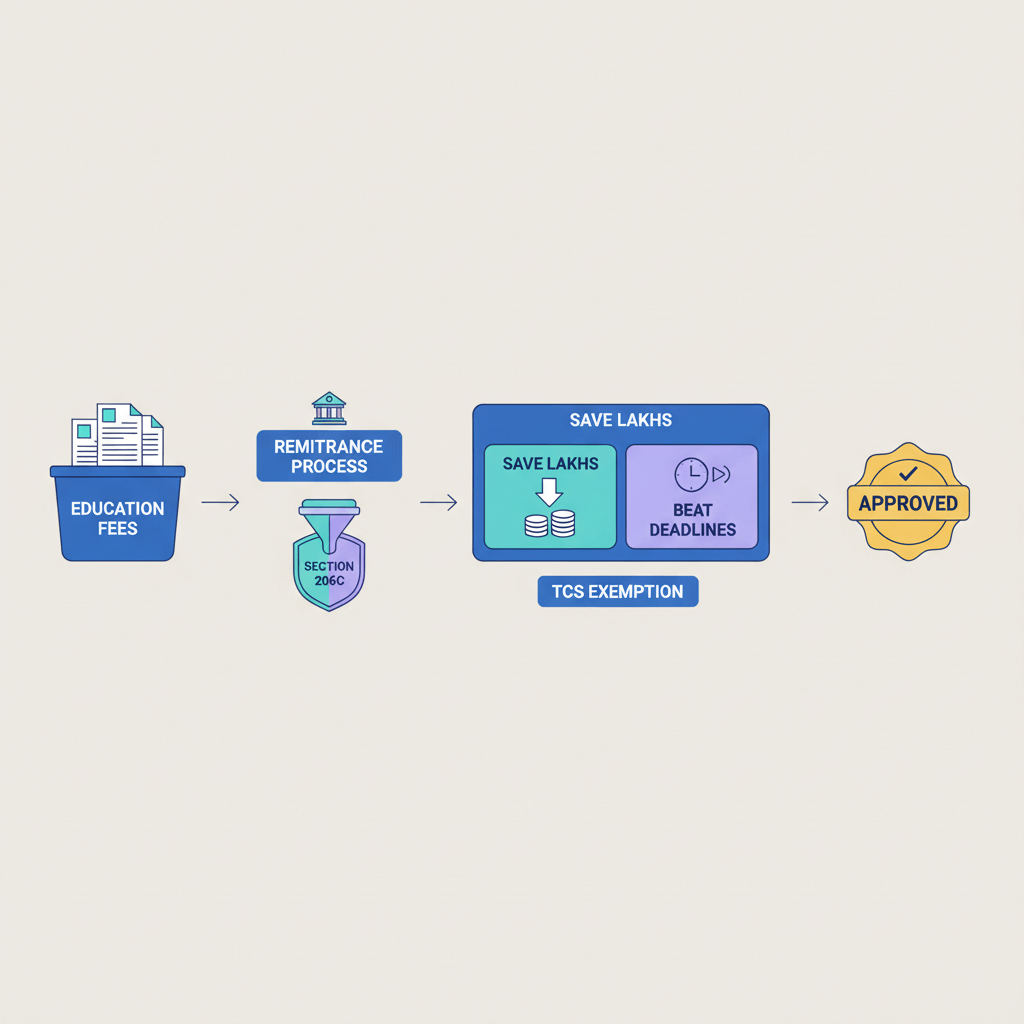
- Understand taxes and fees, TCS on education remittance is 0.5% up to INR 7 lakh and 5% beyond, loan funded remittances are 0.5% from the first rupee.
- Total landed cost includes forex markup, service fee, GST on fees, SWIFT charges, and TCS, compare multiple providers before booking.
- End to end timelines are usually five to seven working days, add buffer for verification, international banking, and university posting.
- Keep every record safe, Foreign Outward Remittance Certificate, TCS certificate, SWIFT copy, invoices, they are essential for tax filing and future transfers.
- For inbound payments from freelance work, Karbon Business offers virtual foreign accounts, mid market rates, e-FIRA, and quick INR settlement.
What is outward remittance for education fees?
Outward remittance means sending money from India to a foreign beneficiary, when you pay tuition, hostel charges, application or exam fees to a foreign university, you are making an outward remittance. The Reserve Bank of India permits resident individuals to remit up to USD 250,000 per financial year under LRS, education expenses fall under this cap.
Education payments require proper documentation, admission proof, fee invoice, student identity, and purpose declaration. Authorized dealers process these transfers under FEMA and RBI rules, ensuring compliance, taxation, and reporting.
Knowing the framework early reduces last minute surprises, rejected applications, and unnecessary branch visits.
Why do Indian students and parents need to send money abroad?
Education remittances cover much more than tuition. Families commonly pay admission deposits, semester fees, accommodation advances, and living expense top ups. Exam registrations, application portals, course equipment, conference fees, and health insurance premiums also qualify as long as invoices or official notes are available.
- Tuition payments, semester wise or annual, often required before visa issuance.
- Accommodation deposits, halls or private rentals usually ask for one to three months upfront.
- Living expense transfers, proof of funds for visa, or early cushion for first months abroad.
- Exam and application fees, GMAT, GRE, TOEFL, IELTS, and university portals.
- Insurance and specialized equipment purchases with course documentation.
Every payment follows the same compliance path, correct purpose codes, verified beneficiary details, and proper records keep your remittance smooth.
Understanding the regulatory framework
India’s outward remittance rules operate under FEMA, supervised by RBI, LRS is the core policy that allows USD 250,000 per person, per year for permitted transactions including education. Education is a permissible current account transaction, within limits and with documentation you do not need special approval.
Tax Collected at Source applies to education remittances, see TCS for current rates and thresholds. Banks issue a Foreign Outward Remittance Certificate, formerly FIRC, this document is your official proof for tax and future forex requirements.
Compliance is non negotiable, misreporting purpose, splitting to bypass limits, or weak documentation can trigger penalties under FEMA.
Documents required for outward remittance of education fees
- PAN cards of remitter and student, mandatory for tracking and tax linkage.
- Admission or enrollment proof, offer letter or confirmation with course details.
- University fee invoice with amount due, due date, and beneficiary bank details.
- Passport copy of the student, identity verification, visa stamps help for living expense remittances.
- Visa copy when available, strengthens first time remittances.
- Form A2 filled per transaction with purpose code and beneficiary information.
- Bank statements for six months may be requested for due diligence.
- Aadhaar sometimes asked, PAN remains primary.
Keep digital and physical copies, incomplete or mismatched paperwork is the biggest cause of delays.
Step by step process to send education fees abroad
- Collect documents, admission letter, invoice, PAN, passport, visa, organize them before booking.
- Choose provider, your bank, a forex specialist, or a fintech platform, compare fees, rates, and timelines.
- Fill Form A2, declare purpose, enter beneficiary details, and foreign currency amount.
- Submit and verify, upload or hand over documents, provider checks limits and details.
- Lock or confirm the rate, clarify whether the rate is fixed at booking or at funding.
- Fund in INR, pay via NEFT, RTGS, or UPI, fees and TCS apply at source.
- SWIFT transfer, conversion and international wire to the university bank typically take one to three business days.
- Receive confirmation, save the reference number and Foreign Outward Remittance Certificate.
- Follow up with university, posting to your student account can take extra days.
From submission to university confirmation, expect three to seven working days, add buffers for weekends and local holidays.
Costs involved in education remittance
- Forex markup, the spread over the mid market rate, traditional banks often 2% to 4%, fintech platforms usually 0.5% to 1%.
- Service or transaction fee, banks may charge INR 500 to INR 2,000, fintechs often lower or zero.
- SWIFT charges, outgoing INR 500 to INR 1,500, intermediary or receiving bank may deduct small amounts.
- GST, 18% on service fees where applicable.
- TCS, 0.5% up to INR 7 lakh then 5%, loan funded education remittances are 0.5% from the first rupee.
Illustrative example, sending USD 20,000 at INR 83 per dollar, a bank with 2% markup and fees might cost around INR 17,78,380, a fintech with 1% markup, no service fee, and similar SWIFT could be around INR 17,60,100, saving more than INR 18,000 on one transfer.
Always ask for a full breakup, compare total landed cost, not just the headline rate.
Timelines and what to expect
- Document verification, one to two working days if complete.
- Domestic funding, RTGS or IMPS is instant, NEFT posts in hours.
- International SWIFT, one to three business days to credit the university bank.
- University posting, one to three days more due to batch processing.
Plan for five to seven working days end to end, urgent transfers may be available at a premium, check whether the speed upgrade is worth the cost.
Choosing the right platform
Traditional banks are familiar and trusted, expect higher markups, slower processing, and possible branch visits for first timers. Fintech platforms and forex specialists can offer tighter spreads, faster transfers, and online journeys.
For outward education transfers, compare your bank with providers like Wise, BookMyForex, or Winvesta on rate plus all fees, documentation ease, speed, and support. For inward remittances from freelance work, consider Karbon Business, Wise Business, Payoneer, or PayPal based on your client geography and settlement needs.
Read reviews from other parents and students, the best platform is the one that is transparent, responsive, and predictable under deadline.
Tax implications and TCS on education remittance
TCS is collected by the provider against your PAN, you can claim credit in your income tax return. Education loan funded remittances incur 0.5% from the first rupee, own funds incur 0.5% up to INR 7 lakh, and 5% on amounts beyond.
Keep your Foreign Outward Remittance Certificate and TCS certificate safely. If TCS is over or under deducted, request a corrected certificate to avoid filing mismatches.
Common issues and how to troubleshoot them
- Rejected or delayed applications, fix incomplete paperwork, name mismatches, and beneficiary errors, review every field in Form A2.
- Funds sent but not posted, track with your SWIFT copy and reference, contact your provider and the university finance office, most cases resolve within a week.
- Incorrect beneficiary details, contact your bank immediately for recall or redirect, expect extra time and possible fees.
- LRS cap exceeded, plan yearly forex usage, the USD 250,000 limit is per person, per year.
- Exchange rate disputes, compare against mid market benchmarks on the transfer day, choose providers with transparent quotes and rate locks.
- TCS mismatches, request revised TCS certificates, maintain a clear paper trail.
Tips to save money and time
- Compare providers, bank, fintech, and forex specialist, never assume your default bank is cheapest.
- Focus on total landed cost, combine rate, fees, SWIFT, GST, and TCS.
- Time your transfer, watch rates for a few days, transfer when the rupee strengthens.
- Consolidate where feasible, one larger transfer can be cheaper than many small ones, balance against TCS thresholds and university schedules.
- Keep a remittance calendar, track LRS usage, TCS paid, and key deadlines.
- Use education loan routes when eligible, get the 0.5% TCS rate from the first rupee.
- Ask the university, installment options, early payment discounts, or preferred partners can help.
- Store every document, FIRC, TCS certificate, SWIFT copy, and invoices, both digital and physical.
- Get help early, reach out to your provider’s support team at the first sign of confusion.
How Karbon Business supports cross border payments
Many students and families also manage inbound foreign earnings from part time freelance work or overseas support. Karbon Business enables Indian freelancers and small service providers to receive foreign payments efficiently, you get virtual accounts in USD, GBP, EUR, and CAD, clients pay via local transfers, funds settle to your Indian bank in 24 to 48 hours.
Compliance is streamlined, Karbon generates e-FIRA automatically within 24 hours of each transaction, and uses mid market rates with a flat 1% fee, giving clarity and predictability to your cash flows.
Final thoughts on sending education fees abroad
Outward remittance for education is routine yet detail heavy, success depends on preparation, correct documents, realistic timelines, and transparent partners. You are not just moving funds, you are enabling a life goal, keep your process organized, ask questions when in doubt, and choose providers that make costs and steps crystal clear.
With the right information and early planning, paying education fees abroad becomes straightforward, predictable, and far less stressful.
FAQ
How do Indian freelancers receive USD or EUR payments in India with least forex loss?
You can use platforms that offer mid market rates and local collection accounts, for example, Karbon Business provides virtual accounts in USD, GBP, EUR, and CAD, charges a flat 1% fee, and settles INR in 24 to 48 hours with e-FIRA for compliance, compare this total landed cost against Payoneer, Wise Business, and bank wires before deciding.
Is FIRA or e-FIRA required for freelancers receiving foreign payments, and how do I get it?
Yes, FIRA or e-FIRA is proof of foreign inward remittance and is useful for compliance and taxation, some platforms like Karbon Business issue e-FIRA automatically within about 24 hours of settlement, if your bank or platform does not provide it proactively, raise a request and keep the document for your records.
What is the cheapest way to get paid by US clients, wire transfer or platforms like Karbon Business?
Direct international wires often involve sender bank fees, intermediary bank cuts, and poorer receiver conversion rates, platforms with local collection accounts and mid market conversion, for example Karbon Business, can reduce costs and speed up settlement, evaluate on rate, fees, speed, and documentation simplicity.
Do I need GST registration to receive international freelance payments in India?
Many freelancers operate below threshold limits, however, export of services has specific GST rules, consult a tax professional for your turnover and place of supply, regardless of GST registration, keep invoices, e-FIRA, and bank statements, platforms like Karbon Business help maintain clean records.
How fast does INR settle when my overseas client pays, can I rely on next day funds?
Settlement depends on the platform and corridor, typical timelines range from 24 to 48 hours after you claim the payment, Karbon Business usually settles INR within this window, bank wires can take longer due to intermediary banks and manual posting.
What charges should I watch out for when clients pay me internationally?
Look beyond headline exchange rates, check platform fee, forex markup, sender fees, intermediary deductions, and receiving bank charges, solutions using mid market rates with flat fees, for example Karbon Business, make total cost transparent, always ask for a complete fee breakup.
Can I invoice foreign clients in USD and get automatic INR conversion with e-FIRA?
Yes, many platforms let you invoice in foreign currency and settle INR automatically, e-FIRA is generated for each inward remittance, Karbon Business provides automatic e-FIRA within about 24 hours, keep this along with your invoice and bank statements for tax filing.
Is TCS applicable when I receive freelance payments from abroad?
TCS applies to outward remittances under LRS, receiving money from overseas clients into India is an inward remittance, so TCS does not apply, still, you should track platform fees, forex rates, and maintain e-FIRA for compliance, platforms like Karbon Business make this straightforward.
Which platform is better for small ticket invoices, like USD 200 to 500, wire or a fintech?
For small ticket invoices, wire fees can be disproportionately high, fintech platforms with local collection, mid market FX, and flat pricing, for example Karbon Business, often deliver better net INR, faster settlement, and simpler documentation.
How do I reduce chargebacks or payment delays from overseas clients?
Use clear contracts, milestone based billing, and trusted payment channels that support compliance and quick reconciliation, invoicing and collection through platforms like Karbon Business adds predictability, and e-FIRA plus payment references make dispute resolution simpler.
What documents should Indian freelancers keep for tax filing when receiving foreign payments?
Maintain invoices, engagement letters, e-FIRA or FIRA, bank statements, platform fee invoices, and a simple ledger of foreign receivables, solutions like Karbon Business help automate e-FIRA and maintain clean trails that your CA can use during filing.
Can I quote mid market FX to clients and still receive good INR, any example?
You can quote in USD or EUR and let the platform convert at mid market rates during INR settlement, for instance, Karbon Business uses mid market Xe benchmarks with a flat 1% fee, this keeps pricing transparent and improves your net realization compared to high markup solutions.
