Business

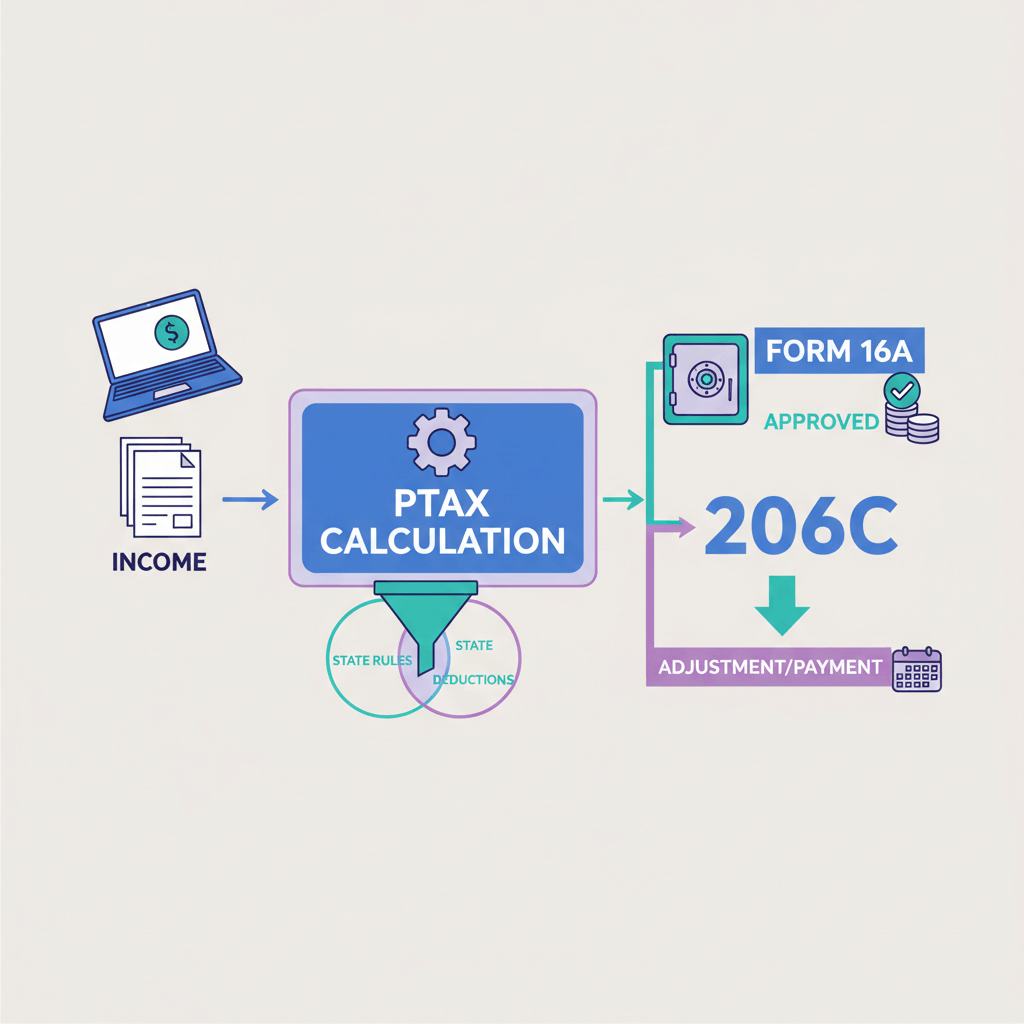
State Taxation Secrets: Freelancers' PTax Survival Guide

Content
share on
Contents
Share On

Key takeaways

  • Professional tax, PT, is a small state levy, capped at ₹2,500 per year, separate from income tax and GST, and many freelancers in levying states must pay it.
  • Freelancers enroll under PTEC, if you hire people, you also need PTRC to deduct and remit PT from salaries.
  • PT rules vary by state, slabs, due dates, and exemptions differ, always verify on your state portal before paying.
  • Platforms or client locations do not change PT liability, your residency and profession determine whether you owe PT.
  • PT is a deductible business expense in your ITR, keep challans and certificates with your GST, advance tax, and e FIRA records.
  • For deeper context, read professional tax for freelancers in 2024 and this professional tax overview.

What is Professional Tax, PT?

Professional tax is a state government charge on people practicing a profession, trade, or employment, it is not based on how much you earn, it is tied to the nature of your work and the state where you live.

Think of it as a small fee for the privilege of practicing your profession in a particular state, separate from your other taxes.

  • Income tax is a central levy on earnings, paid by slabs.
  • GST is an indirect tax on your services, collected from clients once your turnover crosses the threshold.
  • Professional tax is a flat or slab based state charge, capped at ₹2,500 per year.

If employed, your company handles PT under PTRC, if self employed, you enroll under PTEC and manage it yourself.

Short version, PT exists, some freelancers owe it, some do not, and clarity saves you from penalties later. See this guide to professional tax for freelancers in 2024 for a cross check.

Do freelancers actually owe PT?

Yes, if you practice a profession in a state that levies PT. Freelance developers, designers, writers, marketers, consultants, trainers, and similar services typically fall under PTEC.

  • State exemptions, some states exempt people with disabilities, senior citizens, or specific occupations.
  • Income thresholds, a few states apply PT only above a monthly or annual minimum, for example Karnataka starts above ₹25,000 per month.
  • Platforms do not matter, Upwork or Fiverr does not change your liability.
  • Hiring employees, once you hire, you also need PTRC to deduct PT from salaries.

For a plain language reference, bookmark this professional tax explainer.

PTax rules India, a quick state snapshot

The Constitution caps PT at ₹2,500 per person per year. States like Maharashtra, Karnataka, West Bengal, Tamil Nadu, Telangana, and Gujarat levy PT, several others do not, including Delhi and many Union Territories.

Maharashtra

Solo professionals usually pay a flat ₹2,500 annually under PTEC. Employers need PTRC, deduct by state slabs, and file monthly returns.

Karnataka

Enrollment is mandatory if you are under GST, PT for individuals starts above ₹25,000 monthly income, typically ₹200 per month for eleven months and ₹300 in February.

West Bengal

Professionals and traders register, rates follow income slabs, enrollment and payments run through the state PT portal.

Telangana, Tamil Nadu, Gujarat

PTEC applies to individuals practicing professions or trades, rates vary up to ₹2,500, always confirm slabs and due dates on the official portal.

Laws change, verify on your state portal before paying, do not rely only on old posts, cross check with this concise professional tax guide as a secondary reference.

The freelancer tax process, where PT fits in

Freelancer compliance is a mosaic, PT is one tile in a bigger picture.

  • Income tax, file ITR 3 or ITR 4, pay advance tax quarterly if liability exceeds ₹10,000.
  • TDS, claim credits in Form 26AS for domestic clients who deduct tax at source.
  • GST, register beyond the threshold, file GSTR 1 and GSTR 3B monthly or quarterly.
  • IEC and e FIRA, for foreign payments you may need an IEC, every inward remittance should have an e FIRA from your bank or payment platform.
  • Professional tax, check your state, enroll for PTEC, add PTRC if you hire, pay on schedule, store receipts.

Get a wider view of the basics here, income tax basics for freelancers in India.

Your monthly checklist can be simple, invoice, track collections, set aside advance tax and GST, note PT due dates, reconcile with e FIRA documents, and keep one clean folder for everything.

Tiny tax, big consequences if ignored, late PT triggers interest and notices, so add it to your recurring calendar.

Registration, how to get PTEC or PTRC

Documents you will likely need, PAN, Aadhaar, address proof, a recent bank statement, and proof of profession such as a portfolio website or client contract.

Where to register, each state runs its own portal, for example Mahagst in Maharashtra, the West Bengal PT portal, and the Karnataka CTD portal. Search your state’s professional tax enrollment page and avoid third party fee traps.

Timeline, certificates usually arrive within one to seven working days after verification, then you can generate a challan and pay.

Terminology, PTEC is enrollment for the professional, PTRC is registration for employers deducting PT, labels vary by state but the process is consistent.

For step by step context, skim this walkthrough of professional tax for freelancers in 2024.

Paying and filing PT

PTEC, most states take a single annual payment, some use slabs tied to monthly income thresholds, Karnataka is a common example where PT begins only above ₹25,000 per month.

PTRC, if you have employees, deduct from each salary per slab, file monthly or quarterly returns, and remit the total.

Due dates vary widely, some states want annual payment by a fixed date, others want monthly deposits, always confirm on the official portal.

Calculation is typically a simple table on the portal, or a ready reckoner.

Payment method, log in, generate a challan, pay by net banking, card, or UPI, download the receipt, and file it safely.

Reference summary, professional tax quick guide.

Practical examples, PT in action

Case 1, Priya in Mumbai, solo UI or UX designer, earns ₹60,000 per month, Maharashtra levies PT, she enrolls under PTEC and pays ₹2,500 annually, keeps the challan with her ITR documents.

Case 2, Arjun in Bengaluru, full stack developer with a junior on ₹30,000 monthly, he needs PTEC for himself, PTRC for the employee, he deducts PT from salary, files monthly on the CTD portal, and pays his own PTEC as well.

Case 3, Neha in Delhi, content writer earning ₹50,000 monthly, Delhi does not levy PT, liability is zero, she still plans for advance tax and GST once she crosses the threshold.

Want a quick comparison mindset, see how ITR filing differs for salaried vs freelancers.

Records, audits, and keeping everything in sync

Keep your PTEC or PTRC certificate, payment challans and receipts, and any returns filed, store them alongside GST returns, advance tax receipts, and ITR acknowledgments.

Deduction, PT is fully deductible as a business expense, ensure it appears in your profit and loss while filing ITR 3 or ITR 4.

International freelancers, reconcile foreign invoices and credits with e FIRA documents, convert income to INR using the correct rate, and keep PT receipts in the same folder for a clean audit trail.

How a payments platform like Karbon Business helps

If you receive international payments, clean records make tax simple. A platform that auto generates e FIRA, offers fast INR settlement, and gives downloadable statements reduces paperwork and speeds up PT, GST, and advance tax planning. The 60 day currency hold can also help time conversions when you expect rate swings and upcoming tax outflows.

Common mistakes freelancers make with PT, and penalties

  • Assuming PT is not for freelancers, if your state levies it and you practice a profession, you are liable.
  • Missing deadlines, each state has its own portal and calendar, set reminders.
  • Confusing PTRC and PTEC, solo needs PTEC, once you hire, you also need PTRC.
  • Not saving challans, always download and keep the PDF receipt.

Penalties and interest accrue for late or missed payments, usually a small monthly interest rate, fix lapses by paying dues with interest and regularizing on the portal.

FAQ

Is professional tax mandatory for freelancers if I only work with US or Europe clients?

Yes, PT is based on your state of residence and the fact that you practice a profession, client geography does not matter. For example, a Pune based developer billing only US clients still owes Maharashtra PT, you can keep your receipts alongside e FIRA records from a platform like Karbon Business for a clean audit trail.

How much professional tax do freelancers usually pay in India, and is there a cap?

The Constitution caps PT at ₹2,500 per person per year, many states charge a flat ₹2,500, others use slabs tied to monthly income. Check your state portal, pay on time, and claim it as a business expense in ITR.

Do I need both PTEC and PTRC as a freelancer, what is the difference?

PTEC is your enrollment as a professional, you pay your own PT under it. PTRC applies when you have employees, you deduct PT from their salaries and remit it. If you hire a content editor or junior developer, you will likely need both numbers.

I live in Delhi, do I still need to register for professional tax as a freelancer?

Delhi does not levy professional tax, so there is nothing to register or pay for PT. Continue to focus on advance tax, TDS reconciliation, and GST if your turnover crosses the threshold.

What if my income is irregular, some months high and some months low, how does PT work then?

States with income slabs look at the monthly amount for that period, if you cross the threshold in a given month, the slab for that month applies. In flat fee states like Maharashtra, you pay the annual PTEC amount regardless of fluctuations.

I receive payments via PayPal and wire, do these methods change my PT liability in any way?

No, payment rails do not affect PT. What changes is your documentation, keep bank credits, platform statements, and e FIRA documents together. Using Karbon Business for international payments can simplify e FIRA generation and reconciliation.

Can I claim the PT I pay as a deduction in my income tax return under ITR 4 presumptive?

Yes, PT is an allowable business expense. Under ITR 4, expenses are deemed, but you should still maintain the PT challan for records, under ITR 3, include it explicitly in your profit and loss statement.

I switched states mid year for a project, do I pay PT in both states?

Possibly, you may owe PT for the period you resided and practiced in each state, subject to each state’s rules. Close out your PTEC or PTRC in the old state if required, then enroll in the new state, a local CA can help avoid double payments.

What are common penalties for late PT payment for freelancers and how to fix them?

Penalties vary by state, typically you see interest of about one to two percent per month, plus a small fixed penalty for delays. Log in, generate a delayed challan, pay the dues with interest, and keep the receipt, then set calendar reminders to avoid repeats.

How do I align PT with my international payment records for audits or bank queries?

Create a monthly folder with invoices, bank credits, e FIRA, GST filings if any, and PT challans. If you use Karbon Business for international payments, download the e FIRA and statements after each inward remittance and file them next to your PT receipts, this makes audit responses quick and stress free.

Does enrolling for GST automatically mean I must pay professional tax too?

No, GST and PT are separate. Some states, like Karnataka, require PT enrollment if you are under GST, but PT liability still depends on that state’s rules and slabs. Always check your specific state portal.

What documents do I need to register for PTEC quickly as a freelancer?

Keep PAN, Aadhaar, address proof, last three months’ bank statement, and proof of profession such as your portfolio or a client contract. Most states approve within a week, after which you can generate the challan and pay.

Key takeaways

  • Professional tax, PT, is a small state levy, capped at ₹2,500 per year, separate from income tax and GST, and many freelancers in levying states must pay it.
  • Freelancers enroll under PTEC, if you hire people, you also need PTRC to deduct and remit PT from salaries.
  • PT rules vary by state, slabs, due dates, and exemptions differ, always verify on your state portal before paying.
  • Platforms or client locations do not change PT liability, your residency and profession determine whether you owe PT.
  • PT is a deductible business expense in your ITR, keep challans and certificates with your GST, advance tax, and e FIRA records.
  • For deeper context, read professional tax for freelancers in 2024 and this professional tax overview.

What is Professional Tax, PT?

Professional tax is a state government charge on people practicing a profession, trade, or employment, it is not based on how much you earn, it is tied to the nature of your work and the state where you live.

Think of it as a small fee for the privilege of practicing your profession in a particular state, separate from your other taxes.

  • Income tax is a central levy on earnings, paid by slabs.
  • GST is an indirect tax on your services, collected from clients once your turnover crosses the threshold.
  • Professional tax is a flat or slab based state charge, capped at ₹2,500 per year.

If employed, your company handles PT under PTRC, if self employed, you enroll under PTEC and manage it yourself.

Short version, PT exists, some freelancers owe it, some do not, and clarity saves you from penalties later. See this guide to professional tax for freelancers in 2024 for a cross check.

Do freelancers actually owe PT?

Yes, if you practice a profession in a state that levies PT. Freelance developers, designers, writers, marketers, consultants, trainers, and similar services typically fall under PTEC.

  • State exemptions, some states exempt people with disabilities, senior citizens, or specific occupations.
  • Income thresholds, a few states apply PT only above a monthly or annual minimum, for example Karnataka starts above ₹25,000 per month.
  • Platforms do not matter, Upwork or Fiverr does not change your liability.
  • Hiring employees, once you hire, you also need PTRC to deduct PT from salaries.

For a plain language reference, bookmark this professional tax explainer.

PTax rules India, a quick state snapshot

The Constitution caps PT at ₹2,500 per person per year. States like Maharashtra, Karnataka, West Bengal, Tamil Nadu, Telangana, and Gujarat levy PT, several others do not, including Delhi and many Union Territories.

Maharashtra

Solo professionals usually pay a flat ₹2,500 annually under PTEC. Employers need PTRC, deduct by state slabs, and file monthly returns.

Karnataka

Enrollment is mandatory if you are under GST, PT for individuals starts above ₹25,000 monthly income, typically ₹200 per month for eleven months and ₹300 in February.

West Bengal

Professionals and traders register, rates follow income slabs, enrollment and payments run through the state PT portal.

Telangana, Tamil Nadu, Gujarat

PTEC applies to individuals practicing professions or trades, rates vary up to ₹2,500, always confirm slabs and due dates on the official portal.

Laws change, verify on your state portal before paying, do not rely only on old posts, cross check with this concise professional tax guide as a secondary reference.

The freelancer tax process, where PT fits in

Freelancer compliance is a mosaic, PT is one tile in a bigger picture.

  • Income tax, file ITR 3 or ITR 4, pay advance tax quarterly if liability exceeds ₹10,000.
  • TDS, claim credits in Form 26AS for domestic clients who deduct tax at source.
  • GST, register beyond the threshold, file GSTR 1 and GSTR 3B monthly or quarterly.
  • IEC and e FIRA, for foreign payments you may need an IEC, every inward remittance should have an e FIRA from your bank or payment platform.
  • Professional tax, check your state, enroll for PTEC, add PTRC if you hire, pay on schedule, store receipts.

Get a wider view of the basics here, income tax basics for freelancers in India.

Your monthly checklist can be simple, invoice, track collections, set aside advance tax and GST, note PT due dates, reconcile with e FIRA documents, and keep one clean folder for everything.

Tiny tax, big consequences if ignored, late PT triggers interest and notices, so add it to your recurring calendar.

Registration, how to get PTEC or PTRC

Documents you will likely need, PAN, Aadhaar, address proof, a recent bank statement, and proof of profession such as a portfolio website or client contract.

Where to register, each state runs its own portal, for example Mahagst in Maharashtra, the West Bengal PT portal, and the Karnataka CTD portal. Search your state’s professional tax enrollment page and avoid third party fee traps.

Timeline, certificates usually arrive within one to seven working days after verification, then you can generate a challan and pay.

Terminology, PTEC is enrollment for the professional, PTRC is registration for employers deducting PT, labels vary by state but the process is consistent.

For step by step context, skim this walkthrough of professional tax for freelancers in 2024.

Paying and filing PT

PTEC, most states take a single annual payment, some use slabs tied to monthly income thresholds, Karnataka is a common example where PT begins only above ₹25,000 per month.

PTRC, if you have employees, deduct from each salary per slab, file monthly or quarterly returns, and remit the total.

Due dates vary widely, some states want annual payment by a fixed date, others want monthly deposits, always confirm on the official portal.

Calculation is typically a simple table on the portal, or a ready reckoner.

Payment method, log in, generate a challan, pay by net banking, card, or UPI, download the receipt, and file it safely.

Reference summary, professional tax quick guide.

Practical examples, PT in action

Case 1, Priya in Mumbai, solo UI or UX designer, earns ₹60,000 per month, Maharashtra levies PT, she enrolls under PTEC and pays ₹2,500 annually, keeps the challan with her ITR documents.

Case 2, Arjun in Bengaluru, full stack developer with a junior on ₹30,000 monthly, he needs PTEC for himself, PTRC for the employee, he deducts PT from salary, files monthly on the CTD portal, and pays his own PTEC as well.

Case 3, Neha in Delhi, content writer earning ₹50,000 monthly, Delhi does not levy PT, liability is zero, she still plans for advance tax and GST once she crosses the threshold.

Want a quick comparison mindset, see how ITR filing differs for salaried vs freelancers.

Records, audits, and keeping everything in sync

Keep your PTEC or PTRC certificate, payment challans and receipts, and any returns filed, store them alongside GST returns, advance tax receipts, and ITR acknowledgments.

Deduction, PT is fully deductible as a business expense, ensure it appears in your profit and loss while filing ITR 3 or ITR 4.

International freelancers, reconcile foreign invoices and credits with e FIRA documents, convert income to INR using the correct rate, and keep PT receipts in the same folder for a clean audit trail.

How a payments platform like Karbon Business helps

If you receive international payments, clean records make tax simple. A platform that auto generates e FIRA, offers fast INR settlement, and gives downloadable statements reduces paperwork and speeds up PT, GST, and advance tax planning. The 60 day currency hold can also help time conversions when you expect rate swings and upcoming tax outflows.

Common mistakes freelancers make with PT, and penalties

  • Assuming PT is not for freelancers, if your state levies it and you practice a profession, you are liable.
  • Missing deadlines, each state has its own portal and calendar, set reminders.
  • Confusing PTRC and PTEC, solo needs PTEC, once you hire, you also need PTRC.
  • Not saving challans, always download and keep the PDF receipt.

Penalties and interest accrue for late or missed payments, usually a small monthly interest rate, fix lapses by paying dues with interest and regularizing on the portal.

FAQ

Is professional tax mandatory for freelancers if I only work with US or Europe clients?

Yes, PT is based on your state of residence and the fact that you practice a profession, client geography does not matter. For example, a Pune based developer billing only US clients still owes Maharashtra PT, you can keep your receipts alongside e FIRA records from a platform like Karbon Business for a clean audit trail.

How much professional tax do freelancers usually pay in India, and is there a cap?

The Constitution caps PT at ₹2,500 per person per year, many states charge a flat ₹2,500, others use slabs tied to monthly income. Check your state portal, pay on time, and claim it as a business expense in ITR.

Do I need both PTEC and PTRC as a freelancer, what is the difference?

PTEC is your enrollment as a professional, you pay your own PT under it. PTRC applies when you have employees, you deduct PT from their salaries and remit it. If you hire a content editor or junior developer, you will likely need both numbers.

I live in Delhi, do I still need to register for professional tax as a freelancer?

Delhi does not levy professional tax, so there is nothing to register or pay for PT. Continue to focus on advance tax, TDS reconciliation, and GST if your turnover crosses the threshold.

What if my income is irregular, some months high and some months low, how does PT work then?

States with income slabs look at the monthly amount for that period, if you cross the threshold in a given month, the slab for that month applies. In flat fee states like Maharashtra, you pay the annual PTEC amount regardless of fluctuations.

I receive payments via PayPal and wire, do these methods change my PT liability in any way?

No, payment rails do not affect PT. What changes is your documentation, keep bank credits, platform statements, and e FIRA documents together. Using Karbon Business for international payments can simplify e FIRA generation and reconciliation.

Can I claim the PT I pay as a deduction in my income tax return under ITR 4 presumptive?

Yes, PT is an allowable business expense. Under ITR 4, expenses are deemed, but you should still maintain the PT challan for records, under ITR 3, include it explicitly in your profit and loss statement.

I switched states mid year for a project, do I pay PT in both states?

Possibly, you may owe PT for the period you resided and practiced in each state, subject to each state’s rules. Close out your PTEC or PTRC in the old state if required, then enroll in the new state, a local CA can help avoid double payments.

What are common penalties for late PT payment for freelancers and how to fix them?

Penalties vary by state, typically you see interest of about one to two percent per month, plus a small fixed penalty for delays. Log in, generate a delayed challan, pay the dues with interest, and keep the receipt, then set calendar reminders to avoid repeats.

How do I align PT with my international payment records for audits or bank queries?

Create a monthly folder with invoices, bank credits, e FIRA, GST filings if any, and PT challans. If you use Karbon Business for international payments, download the e FIRA and statements after each inward remittance and file them next to your PT receipts, this makes audit responses quick and stress free.

Does enrolling for GST automatically mean I must pay professional tax too?

No, GST and PT are separate. Some states, like Karnataka, require PT enrollment if you are under GST, but PT liability still depends on that state’s rules and slabs. Always check your specific state portal.

What documents do I need to register for PTEC quickly as a freelancer?

Keep PAN, Aadhaar, address proof, last three months’ bank statement, and proof of profession such as your portfolio or a client contract. Most states approve within a week, after which you can generate the challan and pay.

The views expressed in the blogs on this page are solely the opinions of the authors and do not constitute expert advice. While we strive to provide accurate and up-to-date information, we make no representations or warranties of any kind, express or implied, about the completeness, accuracy, reliability, suitability or availability with respect to the website or the information, products, services, or related graphics contained on the website for any purpose. Any reliance you place on such information is therefore strictly at your own risk. We disclaim any liability for any loss or damage including without limitation, indirect or consequential loss or damage, or any loss or damage whatsoever arising from loss of data or profits arising out of, or in connection with, the use of this website.

Find out how we can help you today!

Speak to our foreign payment specialist
Whatsapp-color Created with Sketch.
Whatsapp:
+91 74117 02726
Email:
sales@karboncard.com
Address:
Ground Floor, Karbon Business, 1st Stage Rd, Binnamangala, Hoysala Nagar, Indiranagar, Bengaluru, Karnataka 560038

Find out how we can help you today!

Speak to our foreign payment specialist
Whatsapp-color Created with Sketch.
Whatsapp:
+91 74117 02726
Email:
sales@karboncard.com
Address:
Ground Floor, Karbon Business, 1st Stage Rd, Binnamangala, Hoysala Nagar, Indiranagar, Bengaluru, Karnataka 560038

Latest from our blogs

Latest from our blogs

View All
× Save 50% - Start Now