



Key takeaways
- The gig economy India is mainstream in 2025, millions work via delivery, ride-hailing, local services, freelancing, and creator platforms, with rapid growth backed by data from the platform economy India 2023 overview.
- Gig worker earnings vary by city, skill, hours, and platform mix, realistic net ranges span ₹20,000 to ₹1,50,000+ per month, detailed estimates appear below, supported by the Beyond the Gig—Shaping the Future for India’s Emerging Workforce report.
- Mix platforms and time peaks for better payouts, delivery during lunch and dinner rush, freelancing during downtimes, creator monetization when content scales.
Smart scheduling boosts income without adding more hours. - International clients pay more, but fees and bad FX rates can quietly cut 3-5% each payment, use low-fee rails and tools like Karbon Business to keep more of your money.
- Use a simple calculator to project earnings, include incentives, fuel, maintenance, data, platform commissions, and taxes, then track your effective hourly rate.
- Protect yourself with contracts, milestones, compliance documents like e-FIRA, emergency funds, and health insurance, policy shifts are ongoing.
- Invest in specialized skills and value pricing, not just more hours, this is how freelancers cross into ₹1,00,000+ net income.
What is the Gig Economy India and why it matters in 2025
The gig economy India is flexible, platform-mediated work, where you take on short-term tasks or projects instead of holding a traditional full-time job. You might deliver food on Swiggy, drive for Uber, design logos on Fiverr, or edit videos for YouTube creators, you control when, where, and how much you work, you are an independent contractor, not an employee.
India hosts about 7.7 million gig workers today, projected to reach 23.5 million by 2029-30. Urban demand, remote work, and a maturing creator economy are pulling talent into gig platforms, while initiatives like ONDC explore worker protections. For signals and context, see the platform economy India 2023 overview.
Bottom line: Gig work is no longer just delivery boys, it spans mid to high-skilled roles, from electricians and beauticians to full-stack developers and UX designers.
The landscape of gig platforms India
Ride-hailing
Uber, Ola, and Rapido dominate urban mobility, expect peak-hour incentives, ratings-based bonuses, fuel reimbursements in select programs, and straightforward onboarding with license and background checks.
Food and grocery delivery
Swiggy, Zomato, Zepto, Blinkit, and Dunzo compete with order-volume bonuses, tips during festivals, and surge pricing. Payouts are usually weekly, entry is simple if you have a bike or scooter, the work is physically demanding, demand is relentless in metros.
Local and home services
Urban Company connects beauticians, plumbers, electricians, and cleaners with customers. Platforms may require certifications, provide training, tools, and pilot insurance. Strong reviews create repeat business.
Logistics and courier
Porter and Delhivery partnerships pay per load, route optimization matters, owning or renting a vehicle can be profitable if you manage trips per day effectively.
Digital freelancing
Upwork, Fiverr, Freelancer, and Toptal open doors to global clients, escrow protects payments, profiles and ratings are everything, this is where high-skilled work can out-earn local gigs by a wide margin.
Creator monetization
YouTube Partner Program and Instagram enable earnings via ads, sponsorships, and brand deals, once you cross entry thresholds, income can scale rapidly with viral content.
ONDC and worker protections
Government-backed ONDC is piloting worker protections, unions like Telangana Gig Workers’ Union are pushing for formalizing rights and benefits. For broader trends, explore the state of the gig economy in 2025.
Gig worker earnings: realistic numbers
Earnings vary by city density, skills, hours, ratings, and platform commissions. A metro delivery rider earns more than a Tier-2 rider, a developer working with US clients can out-earn local designers, 4.8-star ratings beat 4.2-star ratings for gig volume.
- Delivery and ride-hailing: ₹25,000 to ₹50,000 gross per month at ~200-250 hours, after fuel, maintenance, data, and commissions, net is ₹15,000 to ₹35,000, festival peaks can add ₹5,000 to ₹10,000.
- Home services: ₹30,000 to ₹60,000 net, with certifications and repeat customers lifting rates.
- Digital freelancing: ₹40,000 to ₹1,50,000+ net, international clients pay more, currency conversion strategy can further increase take-home.
- Creators: ₹20,000 to ₹1,00,000+, volatile but scalable with audience growth.
For deeper workforce insights, review the Beyond the Gig—Shaping the Future for India’s Emerging Workforce study.
Quick examples
Delivery rider: 200 hours per month, ₹50,000 gross including incentives, minus ₹8,000 fuel, ₹2,000 maintenance, ₹1,000 data, net around ₹39,000.
Freelance graphic designer: 160 hours, ₹80,000 gross from projects, minus ~20% due to revisions and platform fees, net around ₹64,000.
A simple framework to estimate your own earnings
Step 1: Calculate base earnings
Multiply working hours by tasks per hour and base rate. For freelancers, track billable hours, not just total hours.
Step 2: Add incentives and bonuses
Peak hours and surge pricing can add 20-50%, plan for lunch, dinner, weekends, and festivals to lift average hourly earnings.
Step 3: Subtract costs
Fuel, maintenance, mobile data, platform commissions, and taxes materially reduce take-home, track them weekly to avoid surprises.
Step 4: Effective hourly rate
Divide net earnings by total hours including unpaid time, compare to local salaries, then adjust your platform mix and schedule.
Pro tip: Assume 70% utilization for freelancing, proposals and admin consume time, price accordingly to maintain margins.
Getting paid: domestic versus international flows
Domestic payouts from Swiggy, Zomato, Ola, and Urban Company are typically weekly via UPI or bank transfer, delays can occur due to verification and quality checks. International payments are slower and more expensive, banks add FX markups and wire fees, wallets take 2-4% in blended costs.
- Use clear invoices and milestone billing, do not wait until final delivery for full payment.
- Prefer cheaper rails, ACH in the US, SEPA in Europe, FPS in the UK, for guidance see getting paid by international clients.
- Hold foreign currency when rates are unfavorable, convert when rupee moves in your favor.
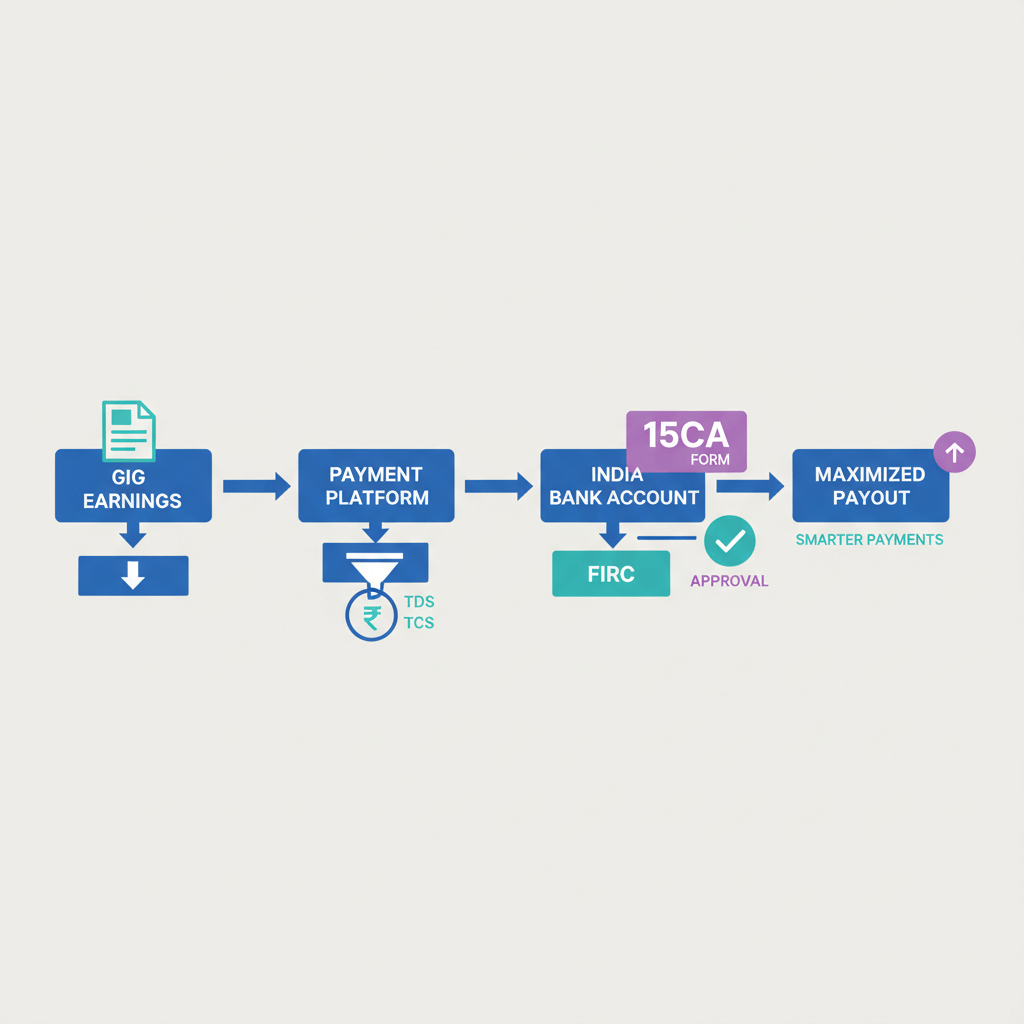
Why Karbon Business helps: You get local USD, GBP, EUR, CAD accounts with ACH, FPS, SEPA capabilities, a flat 1% platform fee with zero forex markup, mid-market rates, funds settle to your Indian bank in 24-48 hours, and an e-FIRA is auto-generated within 24 hours for compliance, details here, e-FIRA and FIRC documents guide.
Example comparison on a $2,000 payout, a traditional wallet may cost ~4% or $80, net $1,920, Karbon at 1% costs $20, net $1,980, saving roughly ₹5,000 per payment. Over a year of monthly payouts, that is ₹60,000+ saved, without extra work.
Every percent saved on fees and FX markups increases your net income immediately, smart payment rails are a free raise.
Managing risks and building stability
Hedge currency swings if you earn in USD, EUR, or GBP, hold balances and convert when rates improve, use contracts and milestones, keep compliance spotless with e-FIRA for inbound international remittances, maintain an emergency fund and buy basic health insurance.
Skills, platform strategy, and growing your gig worker earnings
Growth comes from better platforms, better skills, and better clients. Mix platforms to smooth income, up-skill weekly using practical courses, specialize in niches where value is high, and use value-based pricing, not just hourly billing.
For a cross-market snapshot, see the state of the gig economy in 2025.
Policy landscape and worker protections in India
The Code on Social Security 2020 aims to extend benefits to gig and platform workers, implementation varies by state. ONDC encourages transparency and worker rights, unions are active, expect policy tweaks on taxation, benefits, and platform accountability through 2025.
City and sector snapshots: where the money is
Metros like Delhi, Mumbai, Bengaluru, Pune, and Hyderabad pay 20-30% more than Tier-2 cities. Delivery and ride-hailing are volatile but high demand, digital freelancing is stable and location-independent, home services have repeat demand, creator economy is high-risk, high-reward.
Tools, templates, and resources
- Earnings calculator: Track hours, rates, incentives, and all costs weekly, then compute net and effective hourly rate.
- Invoice template: Standardize client details, scope, milestones, payment terms, and tax IDs, list currency and FX rate for international work.
- Onboarding checklist: PAN, Aadhaar, bank statements, and a professional profile or portfolio, clean documents speed verification.
- Compliance and taxes: Maintain a folder with confirmations, e-FIRA, invoices, and receipts, file ITR on time.
Wrapping it up: your next steps
Choose the right gig platforms India for your skills and city, set realistic expectations for gig worker earnings, optimize payment rails to save thousands annually, manage risks proactively, and invest in skills to move upmarket. Test two or three platforms, build your earnings calculator, and set up low-fee international payment flows, tools like Karbon Business can lift take-home without extra hours.
FAQ
How can I receive USD payments in India without losing big money on forex rates?
Ask clients to pay via local rails like ACH into a USD account linked to your name, then convert at mid-market rates. Platforms like Karbon Business provide local USD details and charge a flat 1% with zero markup, which is typically cheaper than bank wires or traditional wallets.
Is PayPal or Payoneer better than direct bank transfer for international gigs?
Wallets are faster than SWIFT wires but their blended fees plus FX markups can reach 2-4%, for regular payouts a USD, EUR, or GBP account that receives via ACH, SEPA, or FPS, such as with Karbon Business, often yields higher net.
Client is in the US, they want to pay by ACH, what details do I share?
Share your US routing and account number assigned by your international payment platform. Karbon Business issues virtual USD account details that your client can use exactly like a local ACH payment to a US business.
What is e-FIRA, do I really need it for freelance payments from abroad?
e-FIRA is electronic Foreign Inward Remittance Advice, it is proof of foreign funds received, required for FEMA compliance and useful during tax filing. Karbon Business auto-generates e-FIRA within 24 hours for each inbound payment.
How do I quote clients in dollars but keep my Indian taxes simple?
Invoice in USD with clear scope and milestones, receive to your USD account, then convert and record INR income with supporting e-FIRA and invoice documents. Use presumptive taxation under ITR-4 if it fits your profile, consult a CA for GST thresholds.
What is the cheapest way to get paid by UK or EU clients?
Ask UK clients to pay via Faster Payments to your GBP account, EU clients via SEPA to your EUR account. Platforms like Karbon Business enable both, then convert at mid-market rates for a flat 1% fee, cutting typical 3-5% losses.
How do I handle milestone billing on Upwork or outside platforms?
Set 30-50% upfront, then clear milestones tied to deliverables, use escrow when available. Off-platform, send a formal invoice for each milestone and collect to your USD or EUR account to avoid expensive wires.
Rupee is volatile, should I wait before converting my USD payout?
If your platform allows currency holding, you can wait for better rates. Karbon Business lets you hold foreign currency for up to 60 days, useful when INR strengthens or weakens sharply within weeks.
What documents do international clients typically ask for before first payment?
They usually need a formal invoice, bank or platform account details, W-8BEN for some US clients if requested, and a signed contract or SOW. Keep PAN and address details handy for compliance, and share ACH, SEPA, or FPS credentials from your platform.
Can I receive CAD or AUD as an Indian freelancer and still save on fees?
Yes, receive CAD to a local account where supported, then convert at mid-market rates. Karbon Business supports multiple currencies like USD, GBP, EUR, and CAD, with a flat 1% platform fee and no hidden markup.
What is the safest way to avoid client chargebacks or disputes in international projects?
Use written scope, milestone-based invoicing, versioned deliverables, and escrow where possible. Keep all communication inside the platform or email, and secure partial payments before starting major phases.
Which is better for freelancers, hourly or value-based pricing for international work?
Value-based pricing typically wins if you can quantify outcomes, for example, charge $2,000 for a landing page that improves conversions, not just $40 per hour. Combine this with low-fee rails via Karbon Business to maximize net take-home.
