



Key takeaways
- FIRC is the official proof of foreign inward remittance issued by Authorized Dealer banks, essential for GST refunds, audits, and RBI compliance.
- Physical FIRCs were discontinued, banks issue electronic documents like e-FIRA or e-Advice, these carry full legal weight when they include all transaction details.
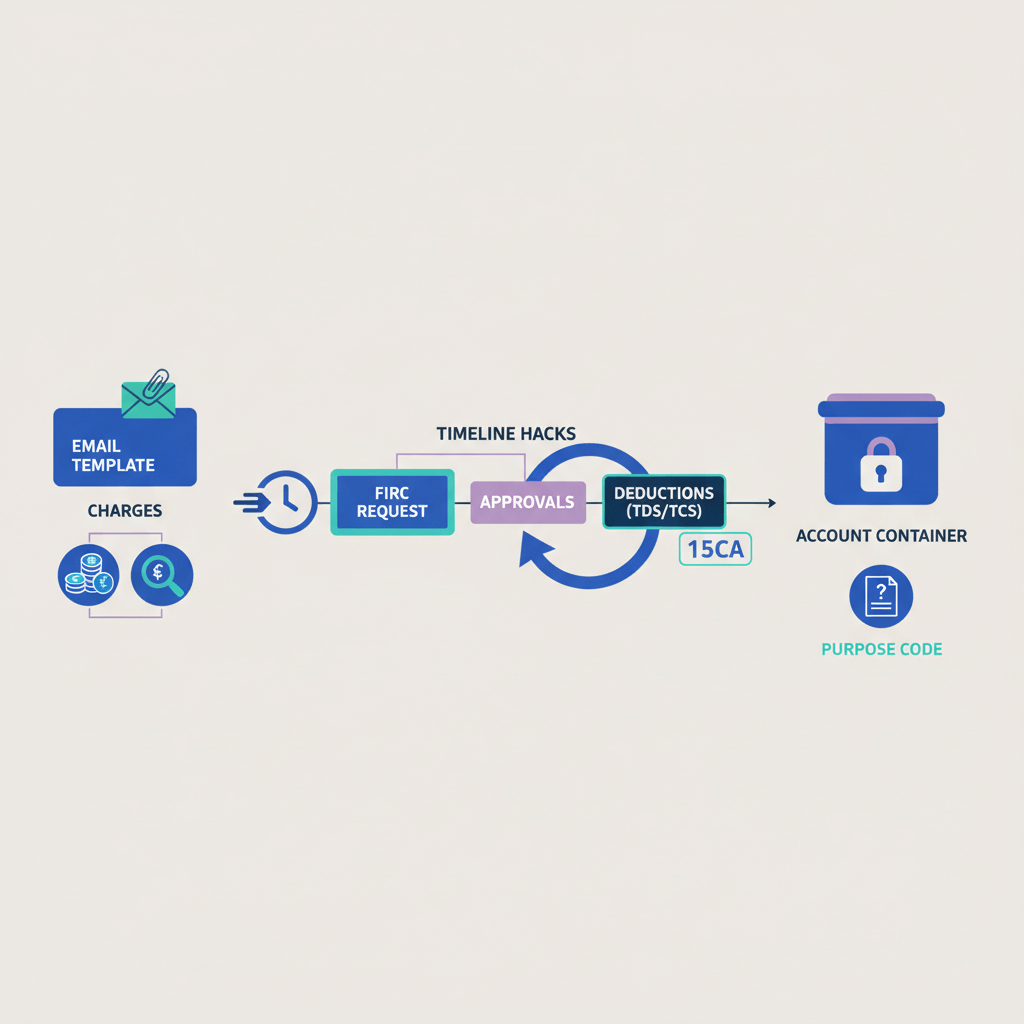
- Prepare a complete request packet, beneficiary details, UTR or SWIFT reference, invoice, purpose code like P0802, and any bank form if required.
- Use a clear, professional email template, include account number, UTR, amount, date, and the reason, export compliance or GST refund.
- FIRC charges typically range from Rs 100 to Rs 1,000 plus GST per certificate, pay exactly as instructed by your bank and keep proof.
- Expect a three to ten business day timeline, follow up on Day 5 and Day 10, escalate after Day 15 if needed.
- Double check the certificate on receipt, name, amount, UTR, date, and purpose code must match your records.
- Handle special cases, aggregator credits, NRE accounts, old remittances, and purpose code corrections, with clear documentation.
- Store certificates for at least seven years, create a dedicated compliance folder and cloud backup.
- Platforms like Karbon Business automate e-FIRA generation, INR settlement, and compliance, saving time for freelancers.
What Is an Inward Remittance Certificate and Why Do You Need It?
An inward remittance certificate, commonly called FIRC, is official proof from your Authorized Dealer Category I bank that foreign currency reached your Indian bank account against export of goods or services. It includes critical details, amount received, currency, remitter information, UTR or SWIFT reference, date, and RBI purpose code. Indian freelancers and service exporters rely on this document to claim GST refunds, satisfy RBI and FEMA requirements, answer auditor queries, and meet client reporting or incentive scheme needs.
Physical FIRCs were discontinued in 2016, today banks issue electronic versions like e-FIRA or e-Advice, which are widely accepted when they contain complete transaction details. Always confirm with your CA that your bank’s format meets current compliance requirements.
Treat FIRC as non negotiable for export compliance, it protects your refunds, your audit trail, and your credibility with regulators.
Understanding FIRC, FIRA, and e-Advice
FIRC is the formal certificate tied to EDPMS reporting, it references the Inward Remittance Message number that links your payment to India’s export records. FIRA is a simpler advice confirming a credit, it may be insufficient for refunds or audits. The accepted modern format is electronic, often termed e-FIRA or e-Advice, and as long as it includes beneficiary name, remitter details, foreign amount, INR equivalent, UTR or SWIFT, date, and a correct purpose code like P0802 for software consultancy or export of services, it works for GST refunds and audits.
Prerequisites: What to Gather Before You Request FIRC from Bank
Compile everything in one well named PDF so the bank officer can process your request without back and forth.
- Beneficiary details, full name as per bank, account number, branch name and code, PAN.
- Transaction specifics, date of credit, foreign amount and INR settled, currency, UTR or SWIFT, remitter name and country, correct RBI purpose code such as P0802.
- Supporting proofs, invoice, contract or PO, bank credit advice or SWIFT message.
- Bank’s FIRC request form if available, filled and signed where needed.
- One combined PDF named clearly, for example, FIRC_Request_UTR12345_5000USD_15Jan2025.
How to Request FIRC from Bank: The Complete Process
Step One: Identify the Right Contact
Find the trade services desk, remittance team, or branch operations email that handles FIRC, check net banking or call your branch, save the official address for future use.
Step Two: Prepare Your Request
Create a concise summary line per UTR, amount, date, purpose code, attach your full PDF packet with beneficiary details, proofs, invoices, and forms.
Step Three: Send Your Email
Use a specific subject that includes account number, UTR, amount, date, mention you need e-FIRA or e-Advice, state the purpose, export compliance or GST refund, keep the tone polite and professional.
Step Four: Pay the Charges
Follow the bank’s instructions exactly, net banking transfer to the designated charges account or authorization for debit, share proof of payment on the same email thread.
Step Five: Track the Timeline
Expect three to ten business days, set reminders for Day 5 and Day 10, reply on the same thread for continuity, mention deadlines if any.
Step Six: Review the Certificate
Verify name, amount, UTR or SWIFT, remitter details, date, and purpose code, request corrections immediately if anything is off.
Step Seven: File and Store
Save PDFs in your compliance folder and cloud backup, name files clearly, keep for at least seven years, print if your CA prefers physical copies.
FIRC Request Email Format: Ready to Copy Template
Subject: FIRC/e-FIRA Request, [Account No], [UTR], [Amount Currency], [Date]
Dear Trade or Remittance Team,
I am requesting an Inward Remittance Certificate, FIRC or e-FIRA or e-Advice, for the following export of services payment credited to my account.
Transaction Details
UTR or SWIFT: [UTR Reference]
Date: [DD/MM/YYYY]
Remitter: [Name and Details]
Amount: [Foreign Currency Amount] ([INR Equivalent])
Purpose Code: [for example, P0802 for Software Consultancy or Export of Services]
This is proof of foreign inward remittance for export compliance or GST refund.
Attached
Invoice copy
Full document packet, PAN, account details, SWIFT advice
Please issue e-FIRA or e-Advice at the earliest and share via email, kindly advise on FIRC charges and payment mode.
Contact: [Your Name, Phone, Email]
Account: [Number and Branch]
Thank you,
[Your Name]
FIRC Charges: What Indian Freelancers Should Expect
Expect Rs 100 to Rs 1,000 plus GST per certificate, fees depend on bank policy, transaction age, and service level. Some banks charge more for duplicates or old remittances. Payment methods vary, net banking transfer to a charges account or direct debit after your consent, always follow instructions and keep proof of payment.
Tip, if you have multiple foreign credits in a month, bundle them into one email thread. You will still receive one certificate per UTR, however a single conversation often reduces back and forth and sometimes total processing friction.
FIRC Timeline: Realistic Expectations and How to Expedite
Normal processing is three to ten working days for complete requests. Delays occur during peak periods, when documentation is incomplete, or when requests route to central operations. Avoid delays with a complete packet, a clear subject, one combined PDF, and CC both branch and central trade desk if applicable. Follow up on Day 5 and Day 10, escalate after Day 15 to the branch manager or nodal remittance team, stay courteous and firm about deadlines.
Special Cases and Troubleshooting Common FIRC Issues
Payments via Aggregators like PayPal, Wise, or Payoneer
Your bank will issue e-Advice or e-FIRA for the INR credit with the aggregator as remitter. For a clean audit trail, also request a payment receipt or export proof from the aggregator to show the full chain from client to you.
NRE Account Credits
Policies differ by bank, confirm whether FIRC is issued for NRE credits, and whether the purpose code rightly reflects export of services. You may need extra documents to reclassify a payment.
Purpose Code Mismatches
If the certificate carries a personal code instead of P0802, request a correction immediately, attach the invoice and contract, and state the true nature of the transaction.
Old Remittances
For six to twenty four month old credits, records may be archived, provide bank statements, original SWIFT, invoices, and be patient, retrieval can take two to three weeks.
Details Do Not Match
If name, amount, or UTR differ from your invoice or bank advice, email a correction request right away, attach highlighted proofs, do not wait until filing week.
Practical Checklist: Your One Screen FIRC Request Summary
- Confirm the correct trade or remittance desk email.
- Note UTR or SWIFT for each transaction.
- Attach invoice, contract or PO, and bank credit advice.
- Add beneficiary details, name, account number, branch, PAN.
- Verify date, foreign amount, INR settled, remitter, purpose code.
- Use the provided email template, keep the subject specific.
- Combine all documents into one clearly named PDF.
- Send, pay charges exactly as instructed, share payment proof.
- Track Day 5 and Day 10 follow ups.
- Review the certificate on receipt, request corrections if needed.
- File PDFs in a compliance folder and cloud backup for seven years.
How Platforms Like Karbon Business Simplify the Inward Remittance Process
If you use Karbon Business for international payments, the platform automates compliance heavy steps, an e-FIRA is generated within twenty four hours, INR settles in twenty four to forty eight hours, fees are a flat one percent with zero FX markup on mid market rates, you can hold foreign currency for up to sixty days if you wish to time conversions. Because the platform is compliant with RBI and FEMA and certified ISO or IEC 27001, documentation like inward remittance certificates becomes part of the workflow rather than an extra chore.
For freelancers juggling multiple currencies and clients, this automation saves time and reduces errors, while those using traditional banks can follow the process in this guide confidently.
Important Compliance Note
Policies, fees, and timelines vary between banks and even branches, always verify the current process with your Authorized Dealer bank before submitting requests. Confirm acceptance of e-FIRA or e-Advice formats for GST refunds and audits with your CA, interpretations evolve and professional guidance helps you stay aligned.
Final Thoughts
Learning how to request FIRC from bank quickly turns from intimidating to routine, with a solid email template, clarity on charges and timelines, and a checklist to avoid delays, you can manage this with confidence. The certificate protects your GST refunds, your audit readiness, and your export compliance, handle it like a key business document. Keep templates handy, back up documents, stay polite and persistent with your bank, and consider automation if the manual process begins to slow you down.
FAQ
How to request FIRC from bank for one USD payment versus multiple credits?
Use one clear email with a subject carrying account number, UTR, amount, and date. For a single payment, include one transaction line in the body. For multiple credits, add a bulleted list with UTR, currency amount, date, and purpose code per line. Banks issue one certificate per UTR, sending them together keeps context and often speeds processing.
Is e-FIRA acceptable for GST refunds or will the officer insist on physical FIRC?
Physical FIRCs were discontinued, e-FIRA or e-Advice is standard today. As long as the document includes beneficiary name, remitter details, foreign amount and INR equivalent, UTR or SWIFT, date, and a correct purpose code like P0802, GST officers and auditors usually accept it. Confirm with your CA for your case.
What is the typical FIRC timeline in Indian banks and how do I escalate if it is delayed?
Three to ten working days is normal for complete requests. Follow up on Day 5 if you have no acknowledgment, again on Day 10 with urgency if needed, escalate to the branch manager or nodal remittance team after Day 15, keep all communication on the same thread so context is clear.
How much are FIRC charges and what payment method do banks usually prefer?
Expect Rs 100 to Rs 1,000 plus GST per certificate, with variations for older remittances or duplicates. Banks either ask for a net banking transfer to a charges account or debit your account after consent, follow their exact instructions and attach proof of payment on the same email thread.
I got paid via PayPal or Wise, can I still get FIRC and what documents should I attach?
Your bank can issue e-Advice or e-FIRA for the INR credit, where the aggregator appears as remitter. Attach invoice, SWIFT or bank credit advice, and also download the aggregator receipt or export proof, this dual documentation helps auditors understand the client to platform to bank flow.
Which RBI purpose code should a freelancer use for software consultancy and will a wrong code affect GST refund?
Use a service export code like P0802 for software consultancy or professional services. A personal transfer code can cause refund rejection, so request a correction from your bank immediately if the certificate carries the wrong code, attach your invoice and contract to support the change.
Can I get FIRC for credits received into my NRE account, I mistakenly used that account for a client payment?
Policies differ, some banks may not issue FIRC for NRE credits or may require reclassification. Contact your branch, explain the business nature of the payment, share invoice and contract, and ask whether they can report it under the correct purpose code and issue an e-FIRA.
My certificate shows a different amount or name than my invoice or bank statement, how do I fix it fast?
Email the bank on the same thread, highlight the differences, attach the correct invoice and bank statement, specify the exact correction, and request a revised e-FIRA. Do this immediately, not during filing week, since corrections can add several days.
Do I still need to send FIRC emails if I use Karbon Business for international payments?
If you use Karbon Business, the platform auto generates e-FIRA within twenty four hours of each payment, and handles INR settlement in twenty four to forty eight hours, so you usually do not need to chase the bank. Keep the platform generated certificate and settlement advice in your compliance folder, it is designed for audit readiness.
What subject line and file naming helps bank teams process FIRC faster for freelancers?
Use a subject like FIRC or e-FIRA Request, Account No, UTR, Amount Currency, Date. Name your PDF clearly, for example, FIRC_Request_UTR12345_5000USD_15Jan2025. A precise subject and one combined PDF reduce back and forth and speed up processing.
Can I bundle multiple UTRs in one email and will it reduce my total cost?
Yes, you can list multiple UTRs in one email to keep context and speed communication. You will still receive one certificate per UTR, costs are per certificate in most banks, however a single thread often reduces friction and saves your time, which is valuable during filing cycles.
How do I prove export when the remitter name shows the aggregator instead of my client on e-FIRA?
Attach your client invoice and the aggregator receipt showing client details, plus the bank credit advice. This combination demonstrates the full chain clearly to auditors and GST officers, and supports the export classification for your service income.
